Introduction / Chapter 8
Green Landmarks
Each of Tokyo's green landmarks has a different origin: a daimyo estate, military land, a reservoir for flood control. Knowing the history of the land helps explain why particular trees are there.
This chapter is in three parts: landmark forests and gardens, green in the streets, and trees of memory and ceremony.
Landmark forests and gardens
Overview
| Landmark | Area | Former use of the land | Trees to see |
|---|---|---|---|
| Mt. Takao Hachioji; national forest | — | National forest after the war; Meiji no Mori Takao Quasi-National Park from 1967[1] | Beech, blue beech and fir on the north slopes; evergreen oaks and Castanopsis on the south. About 1,600 plant species[1] |
| Shinjuku Gyoen Shinjuku/Shibuya; national garden | About 58.3 ha[2] | Naito family (Takato domain) estate → Naito Shinjuku Experimental Station from 1872 → national garden from 1949[3] | Over 10,000 trees[2]; giant tulip trees and London planes[3] |
| Yoyogi Park Shibuya; metropolitan park | About 54 ha[4] | Army parade ground → US military housing → 1964 Tokyo Olympic Village → opened 1967[5] | Planted forest of about 100,000 trees, about 1,000 zelkovas, a 260-tree ginkgo avenue[5] |
| Mizumoto Park Katsushika; metropolitan park | About 92 ha[6] | Shores of the Kogo-tame reservoir, built for flood control in 1729[6] | A forest of 1,800 dawn redwoods, a 1.2 km poplar avenue, waterside alders[6] |
| Hama-rikyu Gardens Chuo; metropolitan garden | About 25 ha[7] | Shogunal falconry ground → Kofu domain's beach villa → shogunal retreat "Hama Goten" → detached palace → open to public 1946[7] | The "300-Year Pine," planted in the time of the sixth shogun Ienobu[7] |
| Rinshi-no-Mori Park Shinagawa/Meguro; metropolitan park | About 12 ha[8] | Meguro experimental nursery from 1900 → Forestry Experiment Station → moved to Tsukuba 1978 → park opened 1989[8][9] | Trees over 100 years old; a 35.5 m poplar, a zelkova 3.82 m in girth[8] |
| Institute for Nature Study Shirokanedai, Minato (near Meguro Sta.) | — | Medieval clan residence → Takamatsu domain villa → gunpowder store → Shirokane imperial estate → Natural Monument and Historic Site from 1949[10] | Mixed forest of evergreens such as Castanopsis, oaks and pines with deciduous trees; the "Story Pine"[10] |
| Komabano Park Meguro | About 3.9 ha[11] | Meiji-era Komaba Agricultural School → Tokyo University of Education Faculty of Agriculture → opened 1986[11] | Separate plantings of northern, Kanto–Kansai and southern woodlands; 19 cherry varieties[11] |
| Inokashira Park Musashino and Mitaka, metropolitan park | About 42.8 ha[12] | Water source for Edo → Imperial forest in the Meiji era → granted to Tokyo City in 1913 → opened in 1917[12] | About 20,000 trees[12]. Cedar forest planted in early Meiji was cut during the war; cherries after the war[13] |
| Shinjuku Central Park Shinjuku, ward park | about 8.8 ha[14] | Site of the Yodobashi Water Purification Plant → opened in 1968 as part of the Shinjuku sub-center plan → transferred to the ward in 1975[14][15] | Takato Kohigan cherry[15], biotope[14] |
| Meguro River cherry trees Meguro and other wards | About 3.8 km | Riverside avenue[16] | About 800 Somei-yoshino cherries[16] |
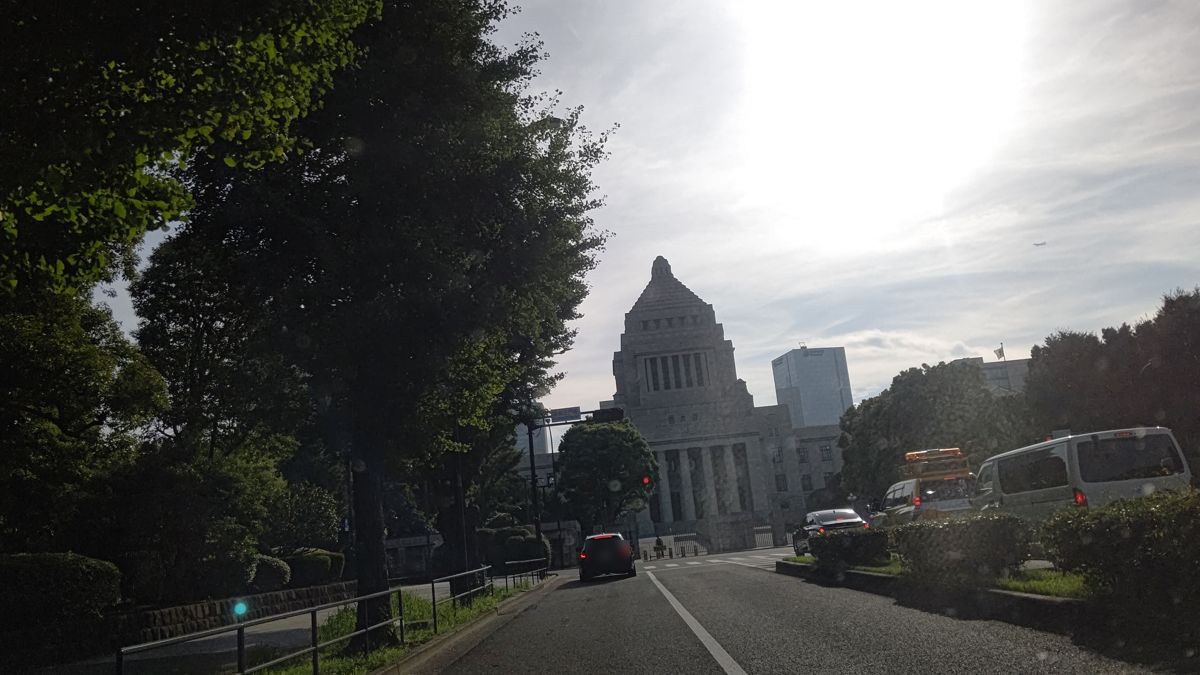
| National Diet front garden Chiyoda | — | Front garden of the National Diet Building[17] | Trees from every prefecture; a great ginkgo older than the Diet Building[17] |
Map
Locations of green spaces in the 23 wards. Municipal shapes are based on National Land Numerical Information (administrative boundaries, MLIT); river courses are approximate. Mt. Takao is about 40 km west, so it appears on the map on the home page (number 5).
Mt. Takao: where two forests meet
Mt. Takao is where cool-temperate and warm-temperate forests meet. On the north slopes, deciduous broadleaf trees such as beech, blue beech and maples mix with fir and red pine. The south slopes have evergreen broadleaf trees such as evergreen oaks, Castanopsis and camellia, with fir.[1] Of about 4,700 plant species in Japan, about 1,600 are said to grow on Mt. Takao. Managed as national forest after the war, it became Meiji no Mori Takao Quasi-National Park in 1967. It draws over three million climbers a year.[1] Takaosanguchi Station at its foot is in Chapter 5, and the protected fir forest in Chapter 2.
Shinjuku Gyoen: from estate to experimental station to park
In the Edo period it was part of the estate of the Naito family, lords of Takato in Shinshu. In 1872 it became the Home Ministry's "Naito Shinjuku Experimental Station," testing crops and horticultural plants. It opened to the public as a national garden in 1949.[3] It covers about 58.3 hectares and has more than 10,000 trees.[2]
| Giant tree | Girth | Height | Age |
|---|---|---|---|
| London plane | 6.30 m | 26 m | 120+ years |
| Tulip tree (symbol tree) | 4.91 m | 35 m | 120+ years |
| Japanese elm | 3.83 m | 22 m | 120+ years |
| Bald cypress | 3.37 m | 25 m | 120+ years |
| Yulan magnolia | 2.38 m | 14 m | 150+ years (a famous tree since the Edo period) |
Source: Ministry of the Environment, Giant Tree Database, observation course guide "Shinjuku Gyoen"[3]
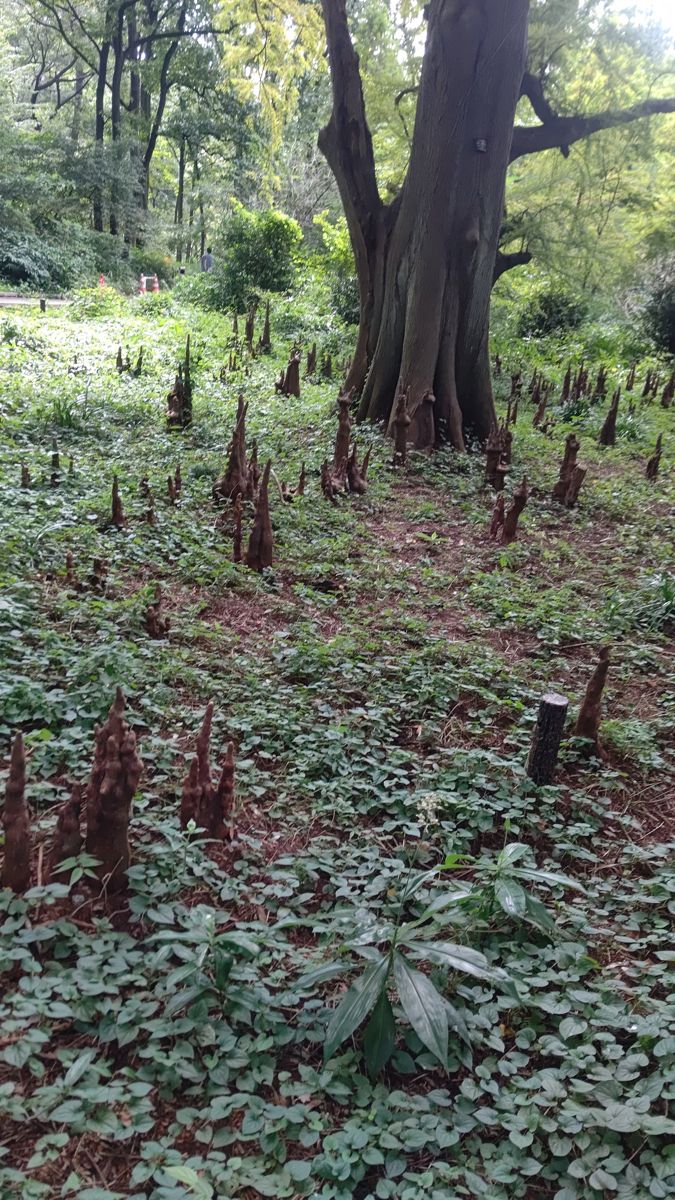
The tulip tree, London plane and bald cypress all came from abroad. The history of growing foreign plants at the experimental station can be read in today's line-up of giant trees.
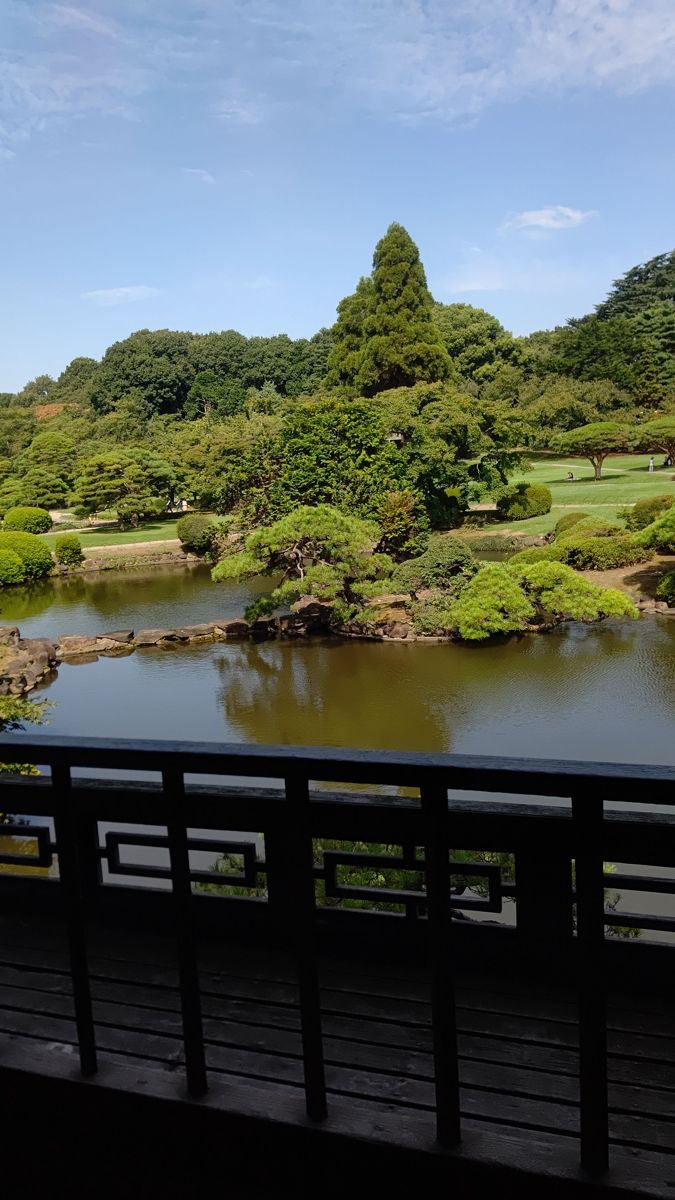
Beside the pond of the Japanese garden stands the Former Goryotei pavilion, known as the "Taiwan Pavilion." Built in 1927, it is a single-story timber building in the Minnan style of southern China, and is a Tokyo Metropolitan selected historic building.[18]
Yoyogi Park: a forest born from military land
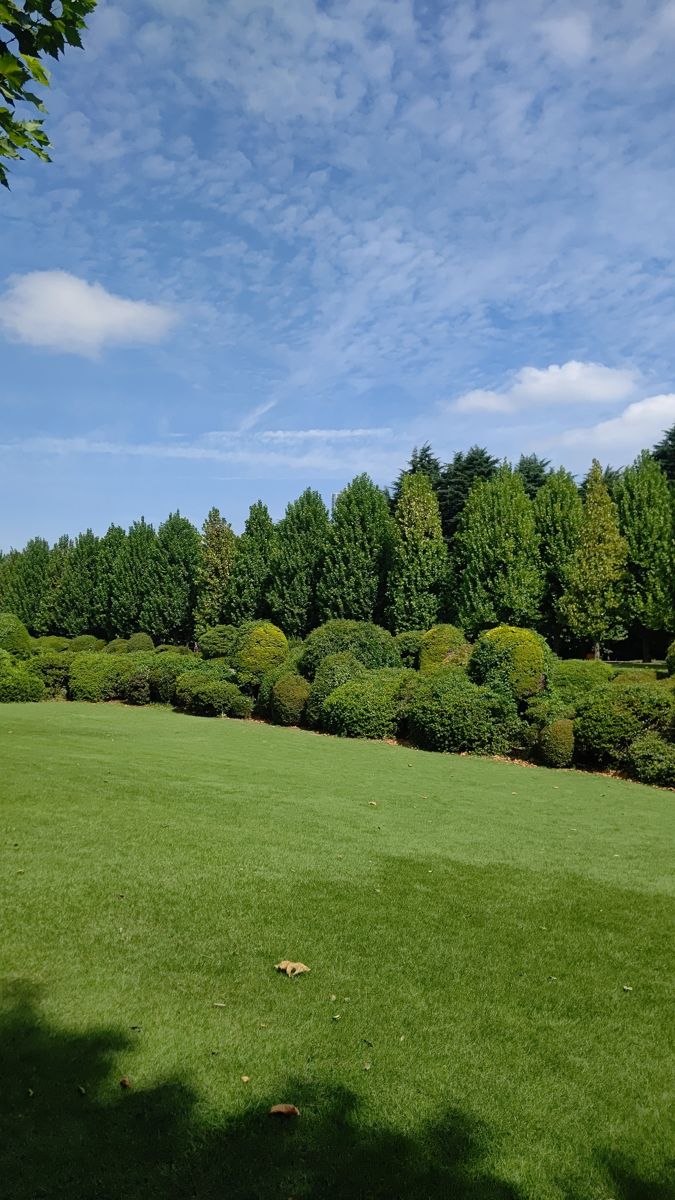
Before the war the land was an army training ground; after the war, a US military facility; and in 1964 the Tokyo Olympic Village. The park opened on 20 October 1967.[4][5] It is a man-made forest of about 100,000 trees, with about 1,000 zelkovas including the avenue, about 700 cherries and a 260-tree ginkgo avenue.[5] It forms a continuous green area with the neighboring Meiji Jingu forest (Chapter 5, Chapter 4).
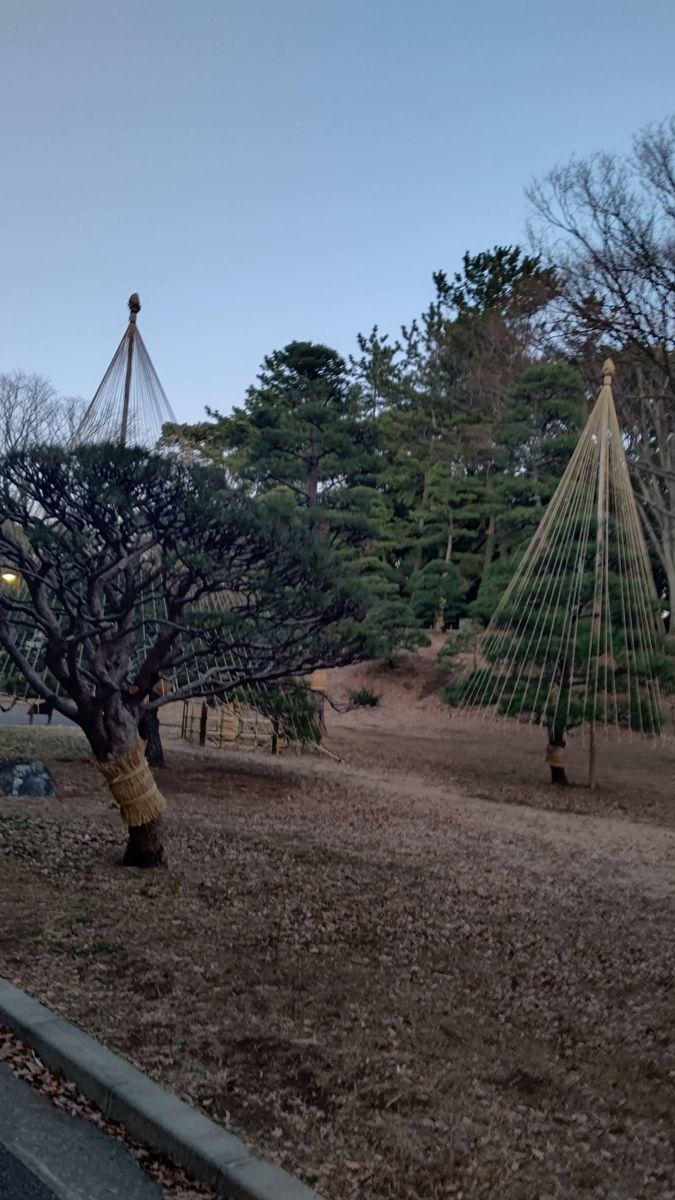
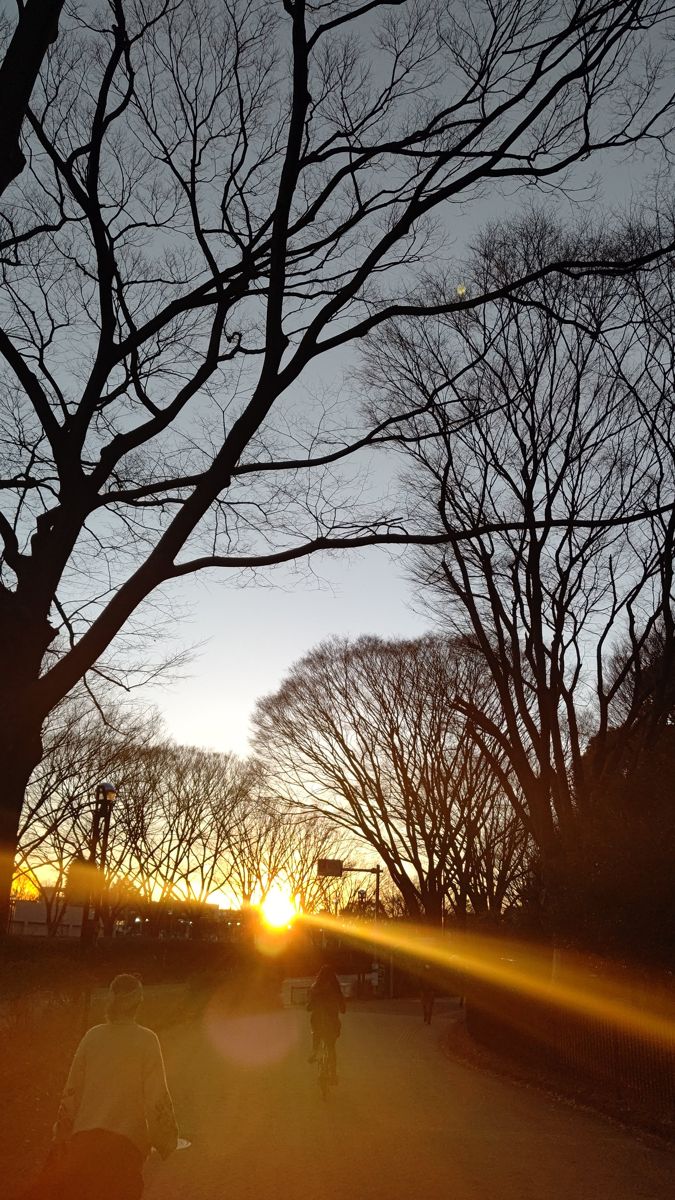
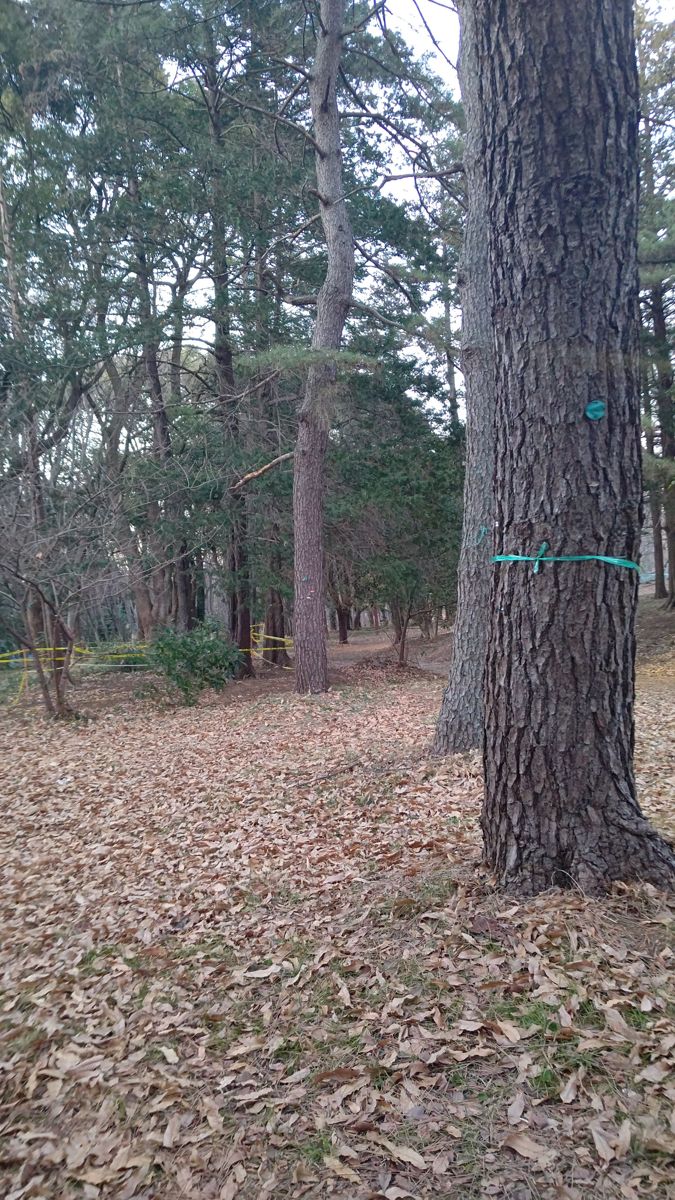
Visiting in winter, the author found the pines fitted with yukitsuri snow supports and komomaki straw wraps, while the deciduous trees had shed their leaves and the setting sun shone through their branches.
Mizumoto Park: Tokyo's only water-village landscape
A park of about 92 hectares in Katsushika, said to be the only place in Tokyo with a suigo water-village landscape.[6] It lies along the Kogo-tame reservoir, built in 1729 for flood control; because it was the water source for surrounding villages, the area was named "Mizumoto," the source of water.[6]
The trees to see are by the water: a forest of 1,800 dawn redwoods, a 1.2 km poplar avenue, and alders that thrive on wet ground.[6]
Hama-rikyu Gardens: a shogun's garden fed by the sea
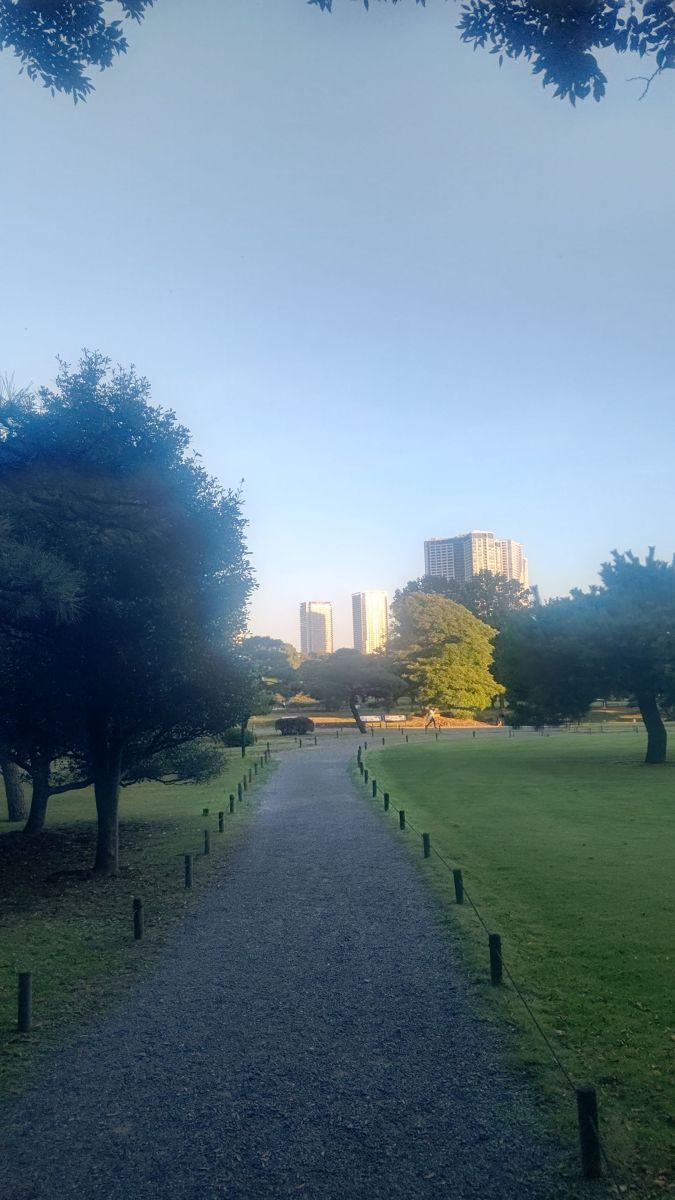
It began in 1654 as a shogunal falconry ground. Matsudaira Tsunashige, lord of the Kofu domain, reclaimed land from the sea and built a villa, the "Kofu Beach Residence." When his son Tsunatoyo became the sixth shogun, Ienobu, it became a shogunal retreat, "Hama Goten." Successive shoguns reworked it, and it took roughly its present form under the eleventh shogun, Ienari. After the Meiji Restoration it became an imperial detached palace; it was given to Tokyo in November 1945 and opened in April 1946. It covers about 25 hectares and was designated a Special Place of Scenic Beauty and Special Historic Site in 1952.[7]
At its heart is the "Shioiri Pond," which draws in seawater so the view changes with the tides. Sluice gates are still opened and closed to match the water level of Tokyo Bay. The "300-Year Pine" near the entrance is said to have been planted to honor Ienobu's major renovation of Hama Goten.[7] A pine that has lived 300 years stands on land made by reclamation (Chapter 6).
Rinshi-no-Mori Park: a forest that was a forestry research station
A park of about 12 hectares straddling Shinagawa and Meguro wards. It opened in 1900 as the "Meguro Experimental Nursery" and later became the national Forestry Experiment Station (today's Forestry and Forest Products Research Institute). After the station moved to Tsukuba in 1978, the site was turned into a park, opening in 1989.[8][9]
Trees planted in the station's days have grown into giants. Many are over 100 years old, including a zelkova 3.82 m in girth, a 35.5 m poplar, and rare trees such as the endangered hanagagashi oak.[8] It is a place where you can walk through Tokyo's own history of forestry.
Two forests near Meguro Station
The Institute for Nature Study (Shirokanedai, Minato) is about a seven-minute walk from Meguro Station. It held a clan residence in medieval times, a villa of the Matsudaira family of the Takamatsu domain in the Edo period, an army and navy gunpowder store in the Meiji era, and the Shirokane imperial estate from the Taisho era. Because people rarely entered it for so long, nature survived; it was designated a Natural Monument and Historic Site in 1949 and opened to the public. It is a forest of evergreens such as Castanopsis, oaks and pines mixed with deciduous trees, and the "Story Pine" and gourd-shaped pond of the Takamatsu era, as well as earthworks built by the medieval clan, remain.[10]
Komabano Park (Komaba, Meguro) is the former site of the Komaba Agricultural School, founded in the Meiji era to modernize farming. The experimental paddy where German teacher Oskar Kellner, who arrived in 1881, studied soils and fertilizers survives as "Kellner's Rice Paddy," and nearby secondary-school students still grow rice there. After the Tokyo University of Education's Faculty of Agriculture moved to Tsukuba in 1978, the site opened as a park of about 3.9 hectares in 1986. It has separate plantings of northern woodland, Kanto and Kansai coppice woodland, and southern woodland.[11]
Both Rinshi-no-Mori and Komabano Park are green spaces born on land vacated when national research and educational institutions moved to Tsukuba.
Inokashira Park: from a cedar watershed forest to a park of cherries
Inokashira Pond was known as a scenic spot and a water source for Edo from the Edo period, and was depicted in Utagawa Hiroshige's One Hundred Famous Views of Edo. In the Meiji era it became an Imperial forest, and in 1913 it was granted to Tokyo City. On May 1, 1917, it opened as Japan's first Imperial-gift park and first suburban park. Today the park covers about 42.8 hectares and has about 20,000 trees.[12]
Before the war, the pond was surrounded by a dense watershed forest (a forest that stores water) of cedar planted by Tokyo Prefecture in the early Meiji era. During the war, however, many of the cedars were cut to make coffins, and after the war many cherry trees were planted.[13] A cedar forest meant to protect the water was lost to the war and became a cherry-blossom spot. The scenery of Inokashira reflects the history of forestry and of the war.
Shinjuku Central Park: a forest grown on a water-works site
Shinjuku Central Park was opened in 1968 on the site of the Yodobashi Water Purification Plant, as one project of the Shinjuku sub-center plan.[15] It opened as a metropolitan park and was transferred to Shinjuku Ward in 1975. At about 8.8 hectares, it is the largest ward park in Shinjuku.[14] In spring, Takato Kohigan cherries from Ina, Nagano—Shinjuku's sister city—bloom here.[15] The park has a biotope for native plants and wildlife, and in February 2026 a "Flower Forest" with a wood-chip plaza opened.[14]
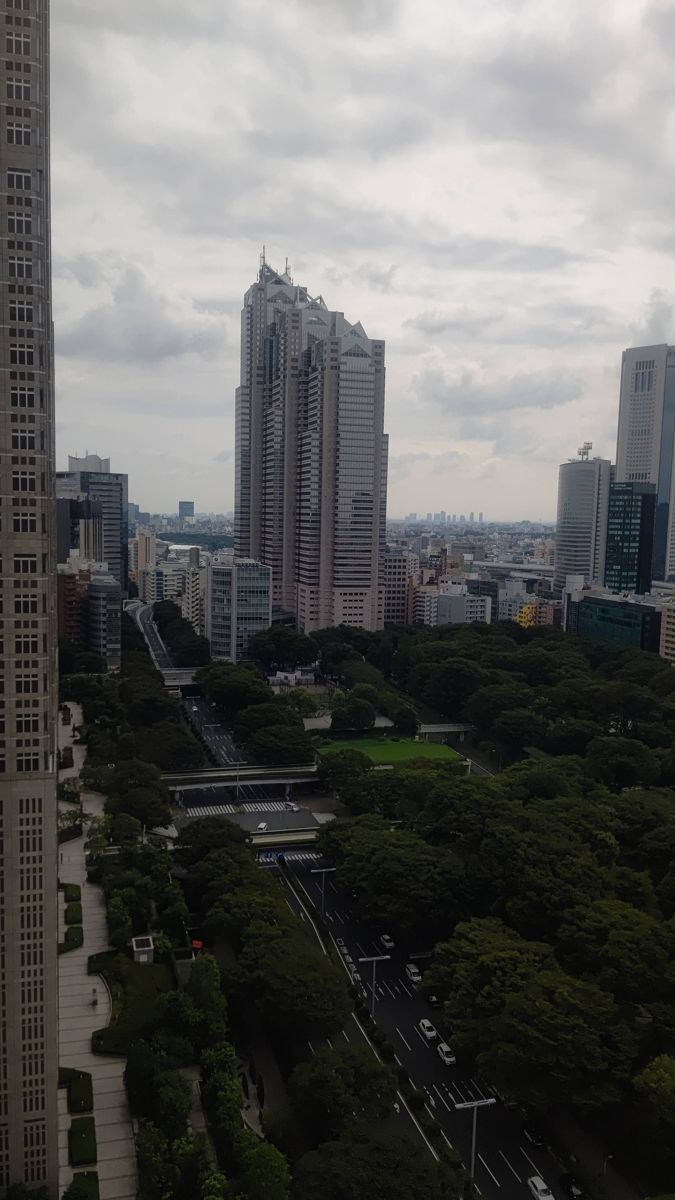
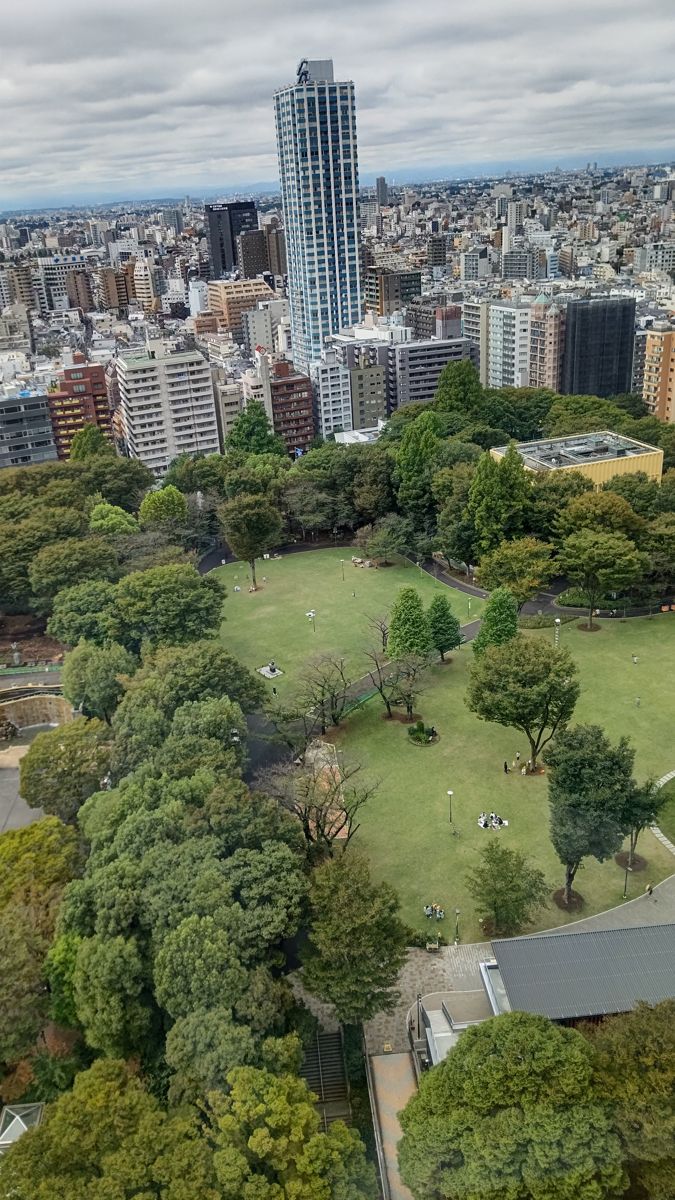
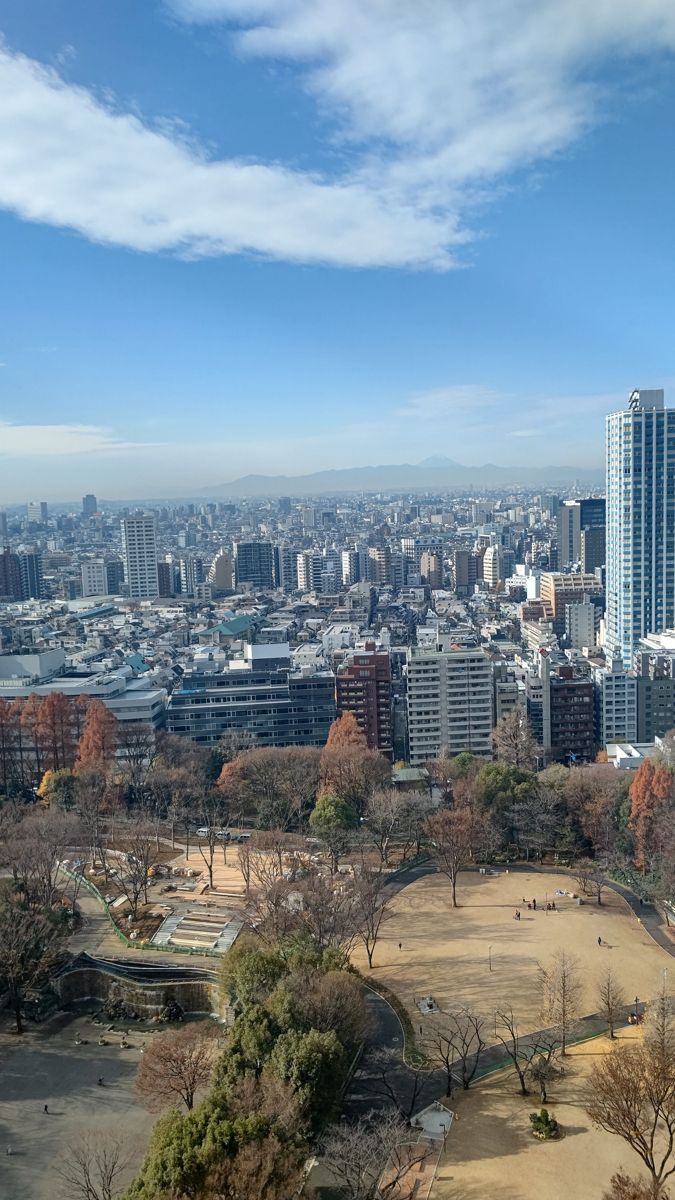
In just over half a century since it opened, a thick layer of trees has grown at the feet of the skyscrapers. Seen from above, the green looks like a single forest stretching across the roads.
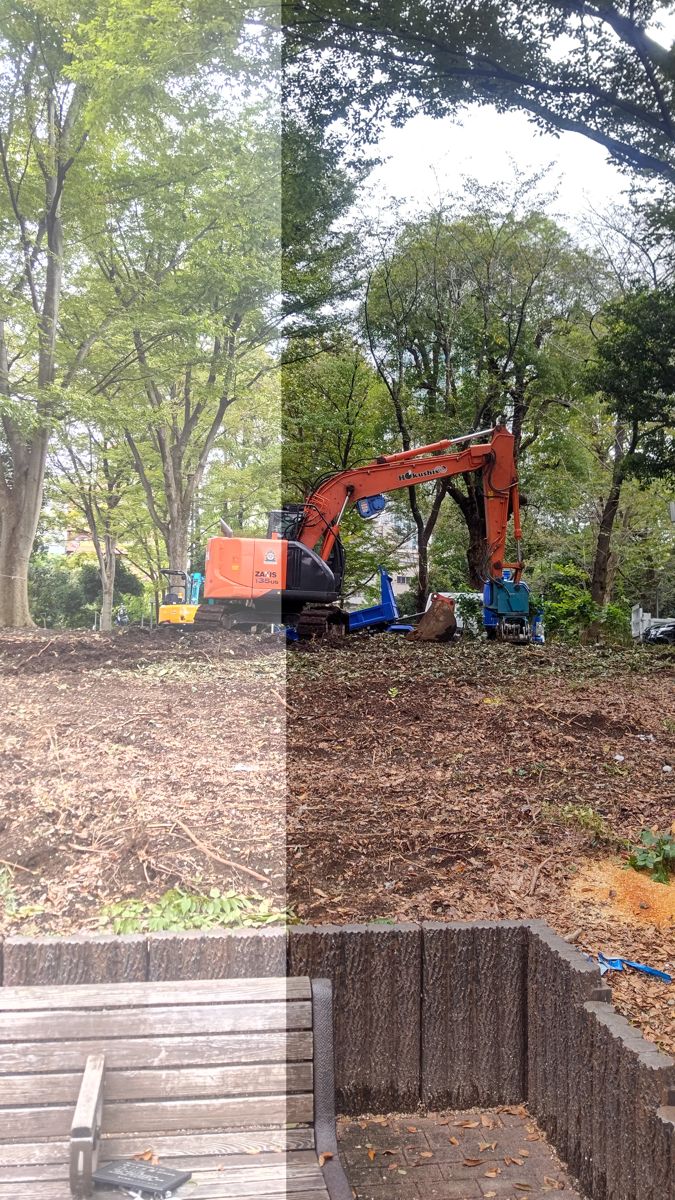
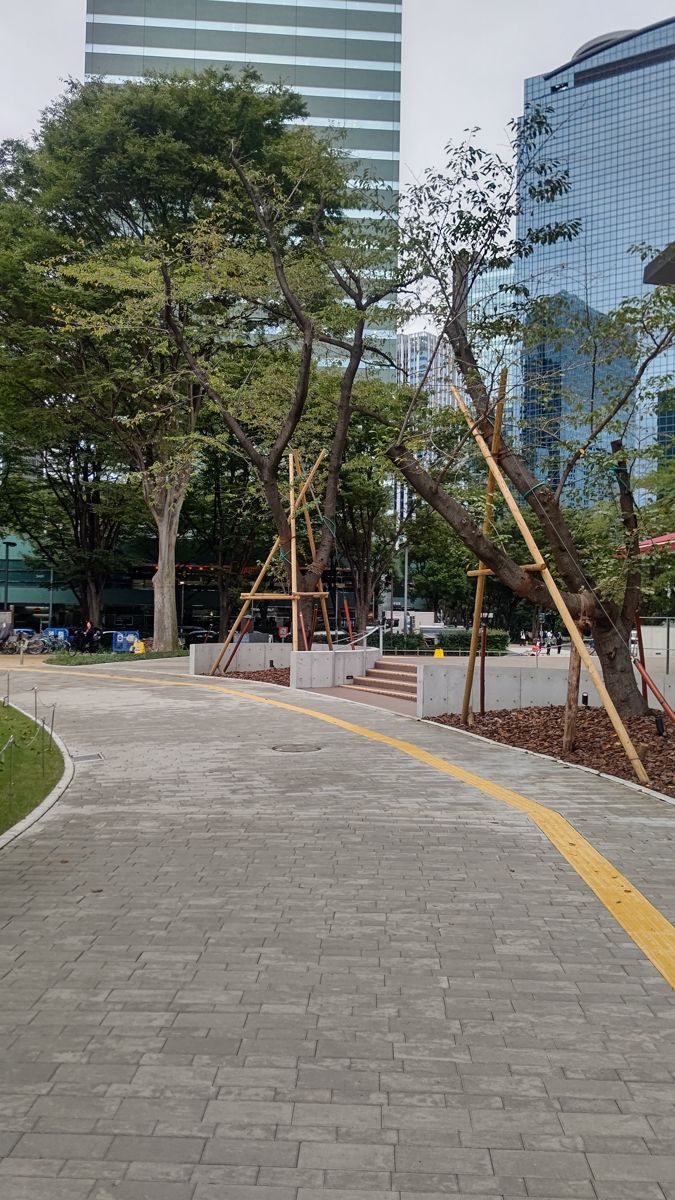
When the author visited in October 2020, renovation work was under way in the park. A forestry machine was working on ground where trees had been cut, and elsewhere newly planted trees were held up by wooden stakes. The park's forest, too, is kept up through a cycle of cutting and replanting.
When I visited again in April 2022, many of the park's tall trees had been cut back hard. Tall conifers had been topped and stripped of almost all their side branches, leaving little more than trunks. Broadleaf trees had been cut partway along their thick limbs, with thin shoots sprouting like brooms near the cuts. Some trunks were wrapped in cloth. I have not been able to confirm from ward or park-manager documents why the trees were cut this far at this time.
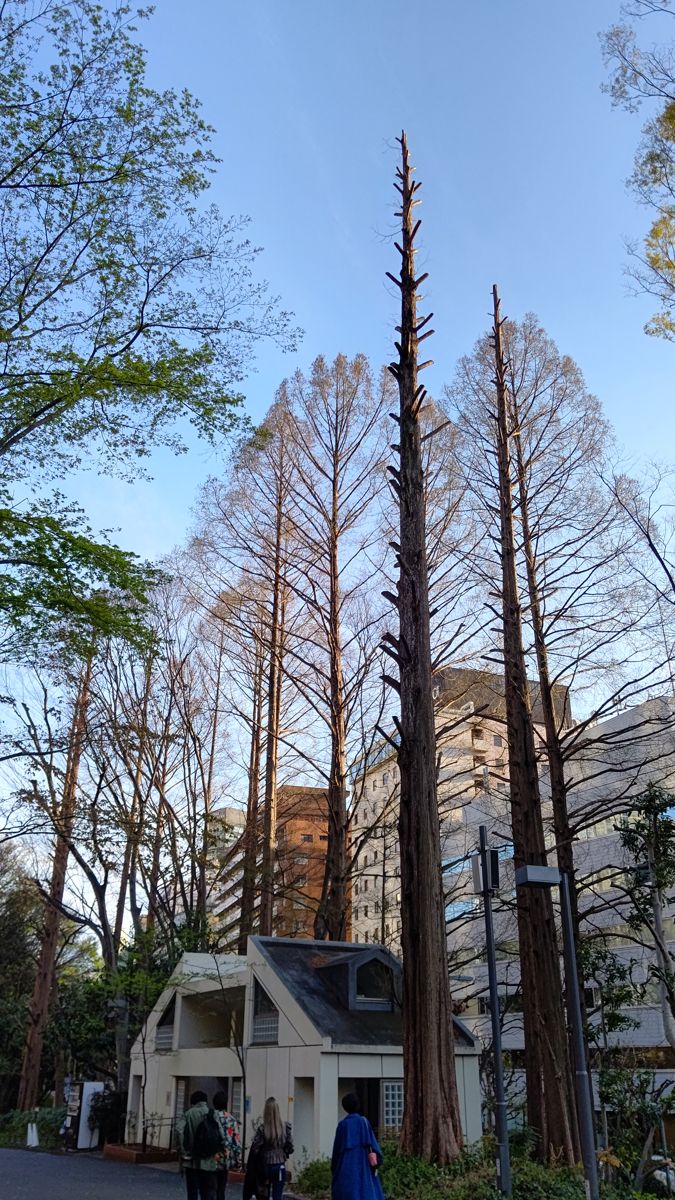
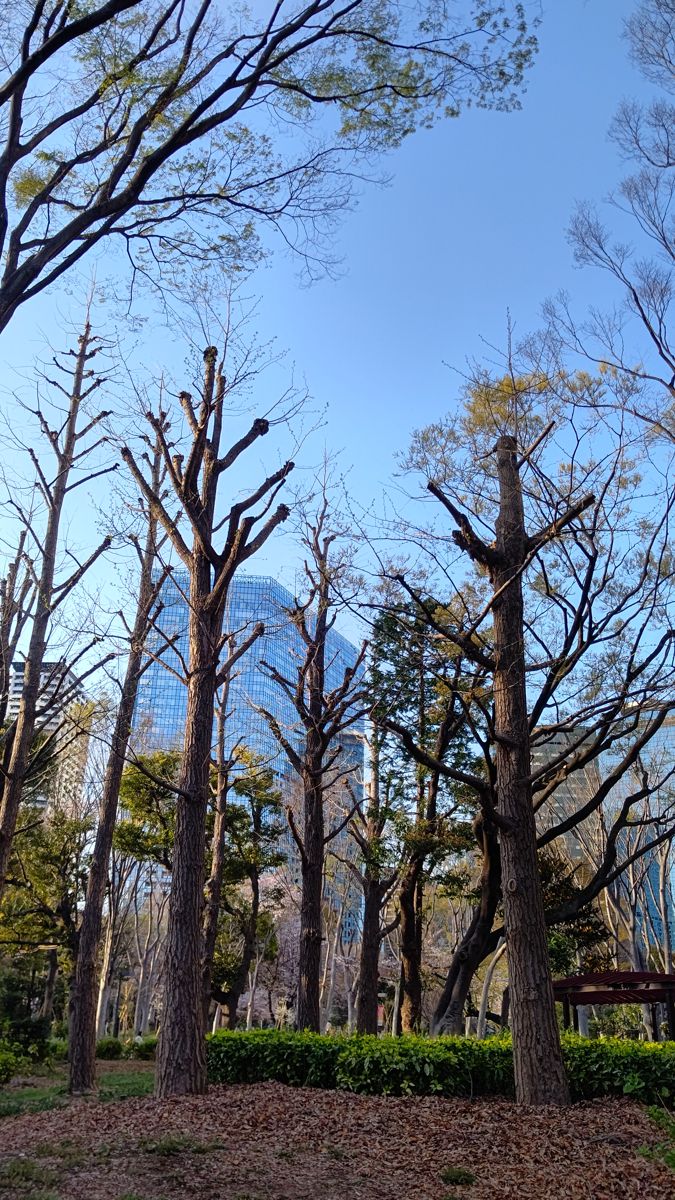
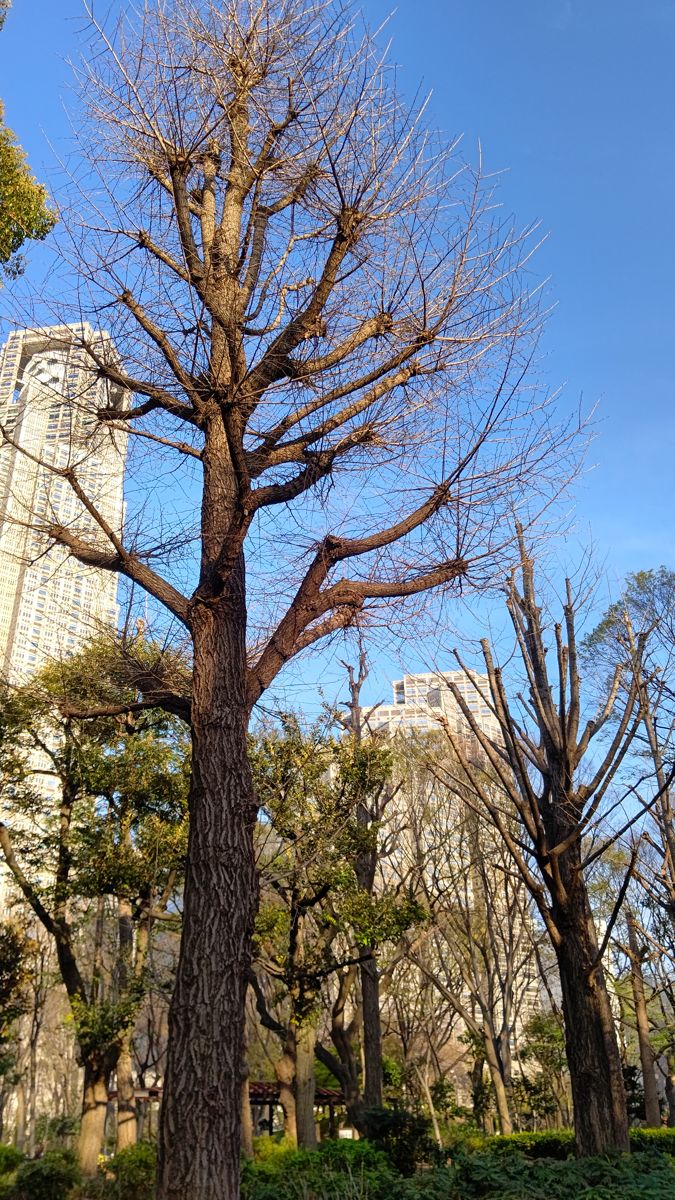
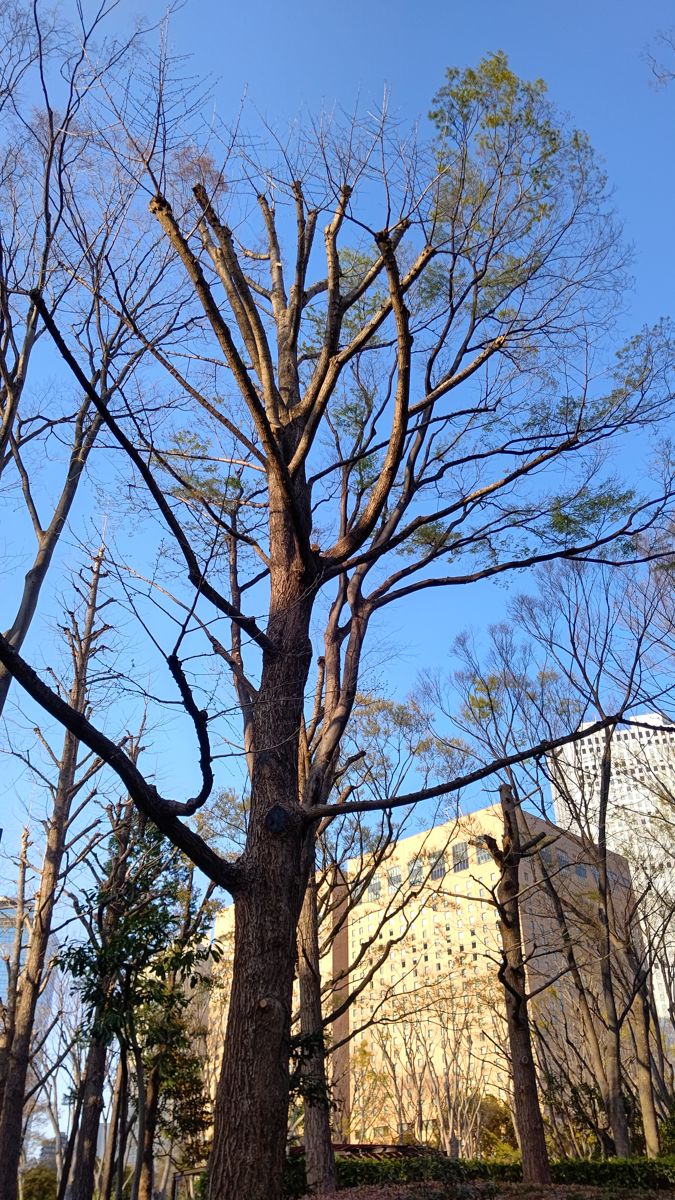
Hard pruning that cuts thick limbs partway has a cost. Research by the National Institute for Land and Infrastructure Management notes that after heavy pruning, masses of sprouts emerge and disorder the crown, and that the large wounds left by cutting big limbs let decay in, so the tree loses its health and its form eventually breaks down.[19] On the other hand, urban parks sometimes cut to reduce the risk of falling branches and toppling trees. Which consideration weighed more in Shinjuku Central Park would need to be confirmed with the park's managers.
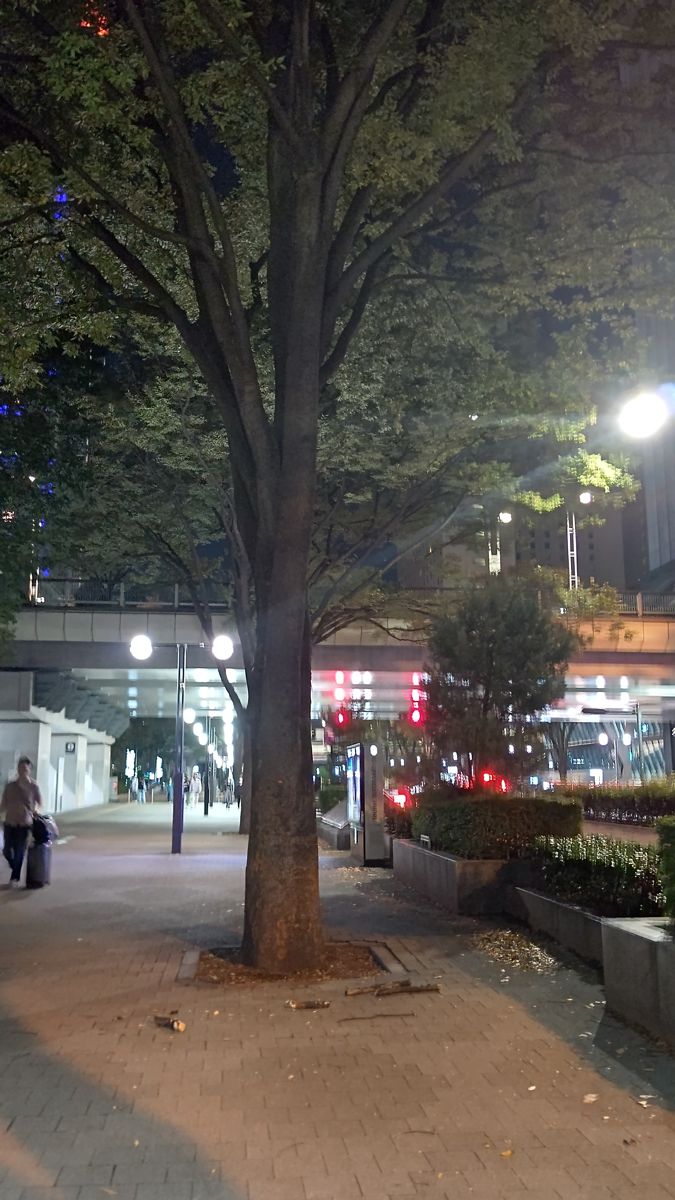
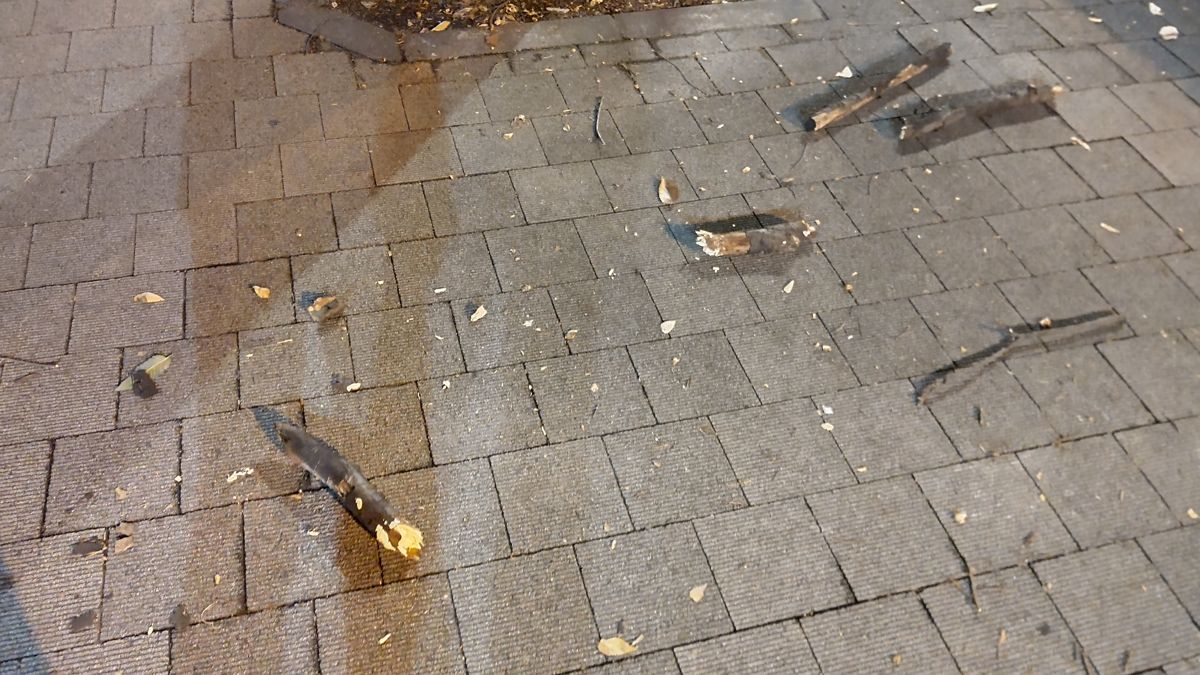
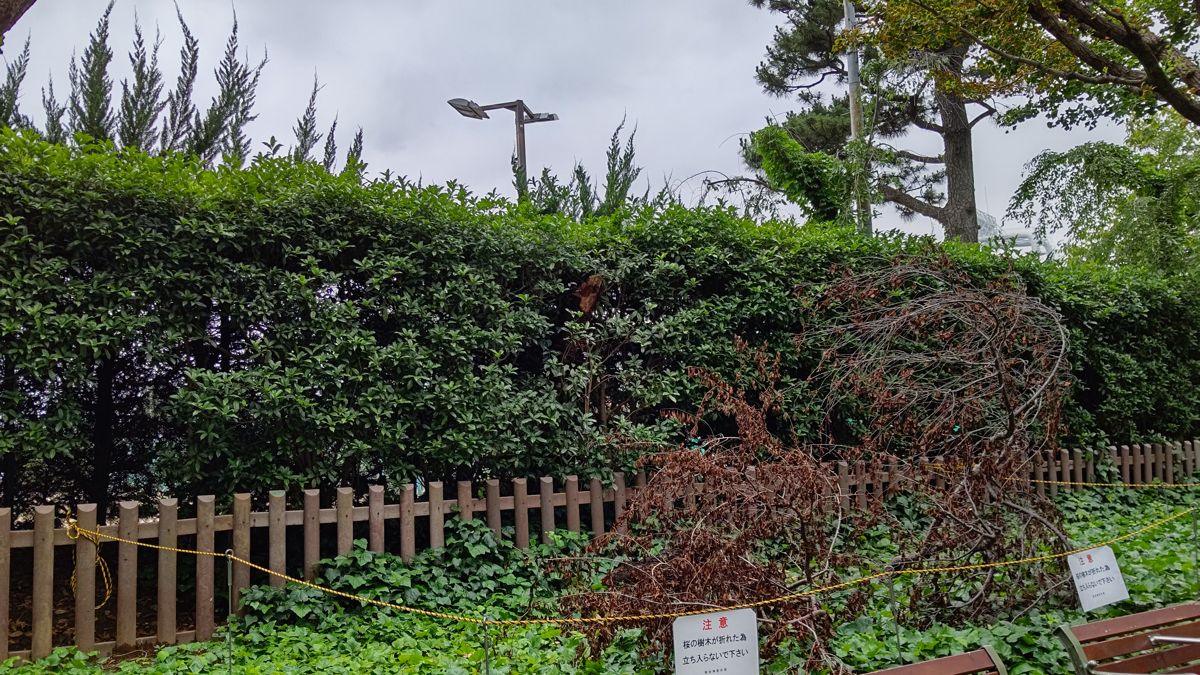
The danger of falling branches is something you can actually see. On a November night in 2024, broken branches lay scattered beneath a street tree on a sidewalk in Nishi-Shinjuku. As long as there are large trees above places where people walk, both cutting and not cutting carry their own risks.
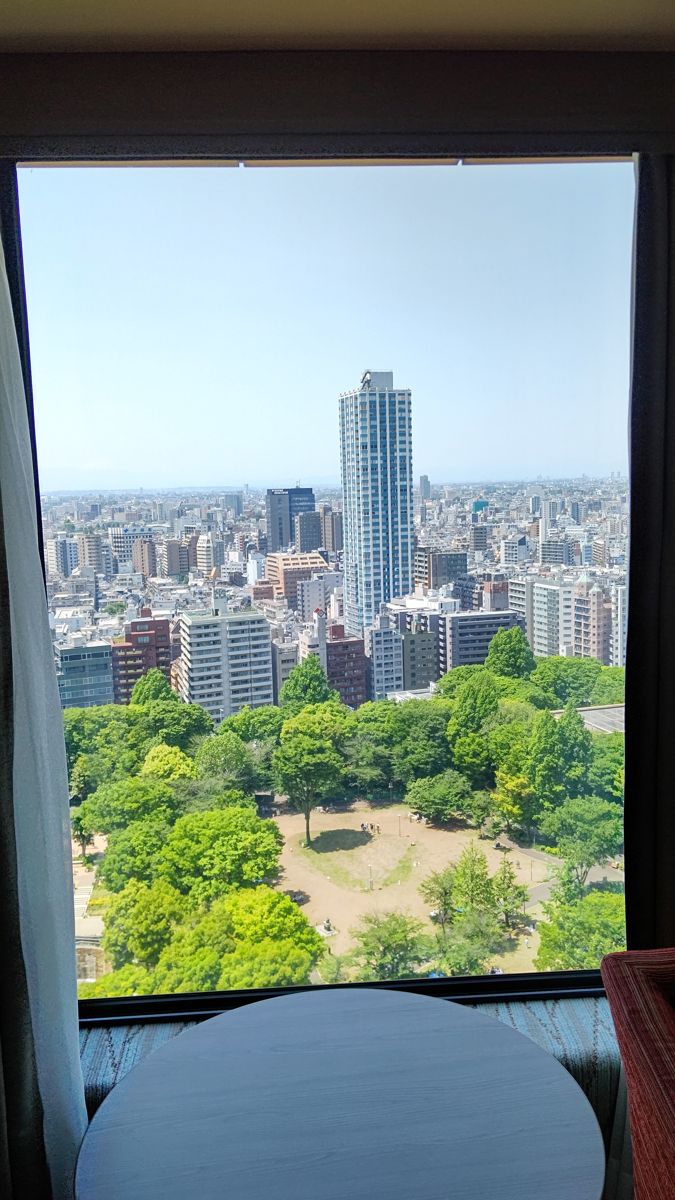
Seen from above a month later, in May 2022, the park was covered in fresh leaves. But the return of the leaves does not mean the hard pruning had no effect. The mass of sprouts that the research above points to shows up precisely as thin shoots and leaves flushing all at once after cutting.
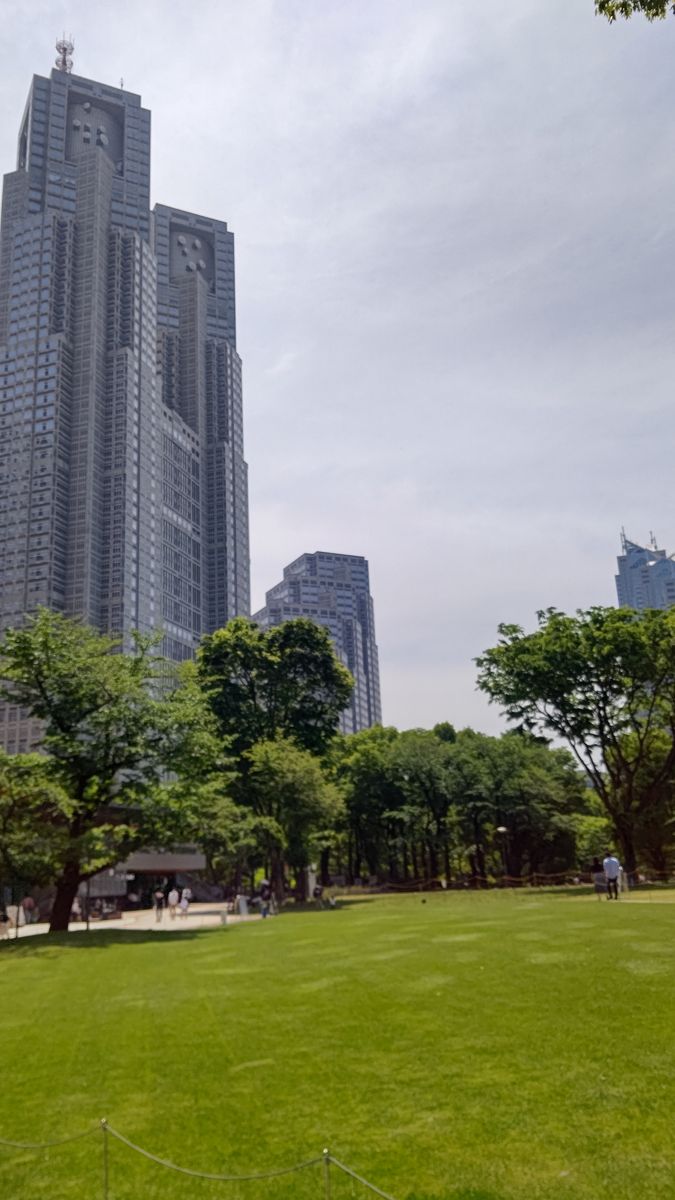
Around the same time, redevelopment work was under way at the park's Chibikko Hiroba (children's plaza). According to notices on site, it was commissioned by the Parks and Greenery Division of Shinjuku Ward's Greenery and Civil Engineering Department. The work ran from mid-November 2021 to mid-October 2022 and included a new play area for infants and the renovation of the large slide. The notices do not show whether the April pruning was connected with this work.
Details of the work are from the notices "Notice of Chibikko Hiroba redevelopment work" and "Notice of partial closure of the play equipment area," photographed by the author on May 5, 2022.
Hibiya Park: a Western-style park on a former parade ground
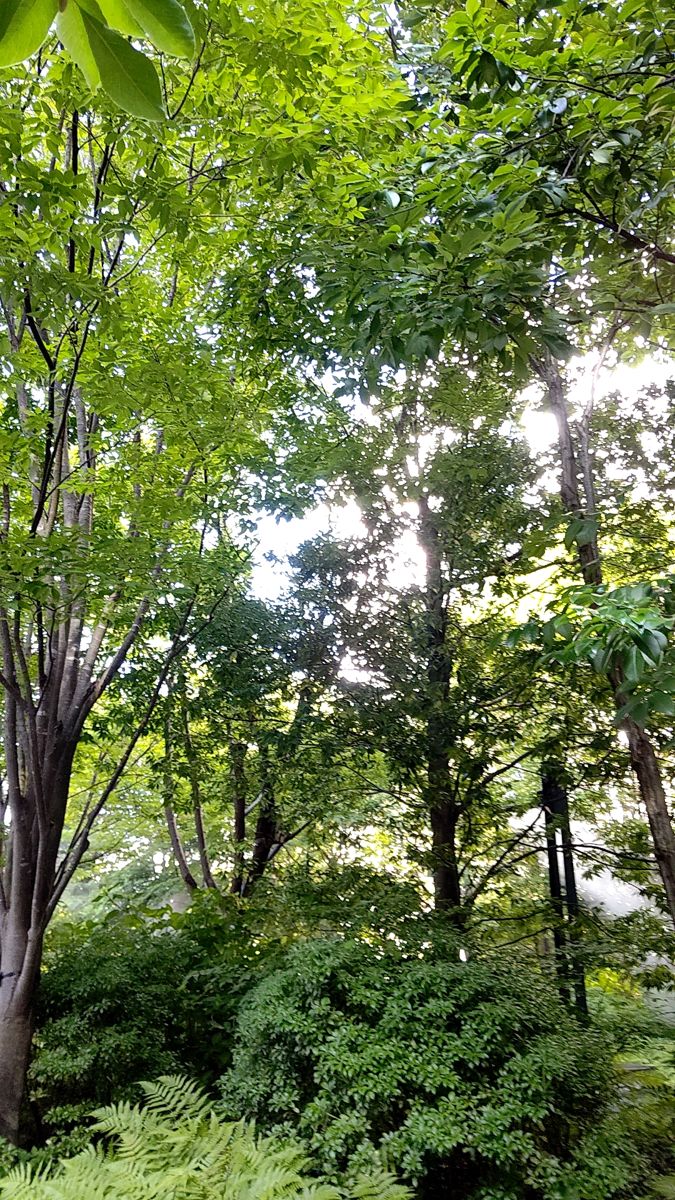
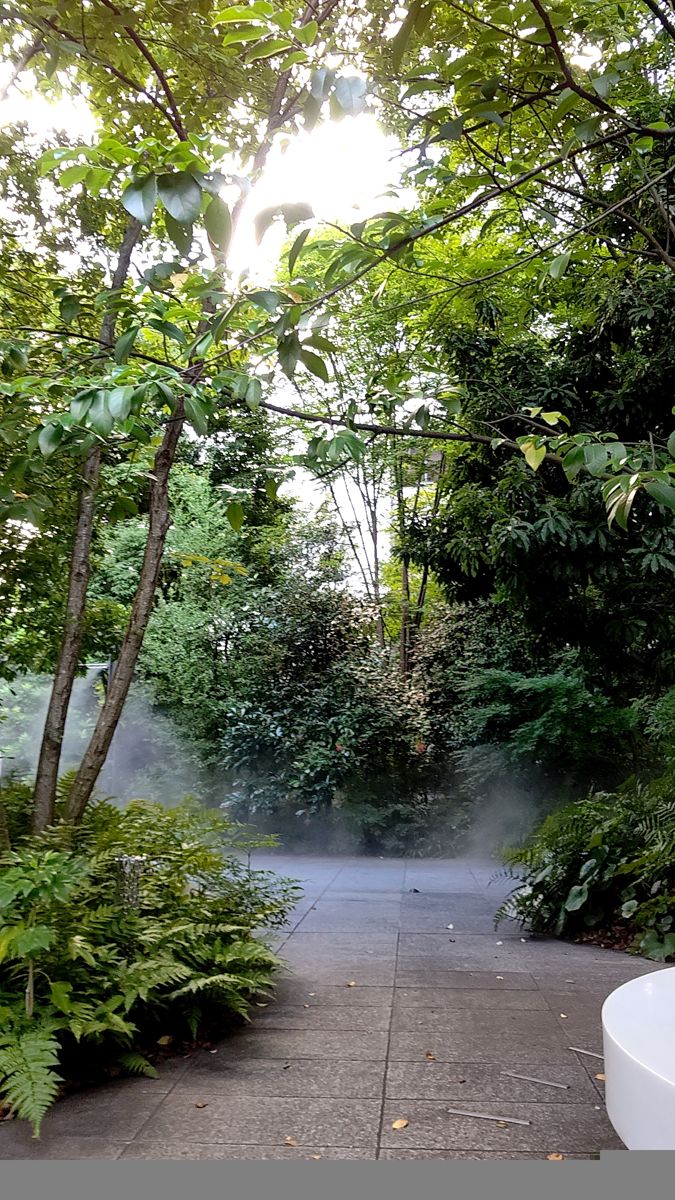
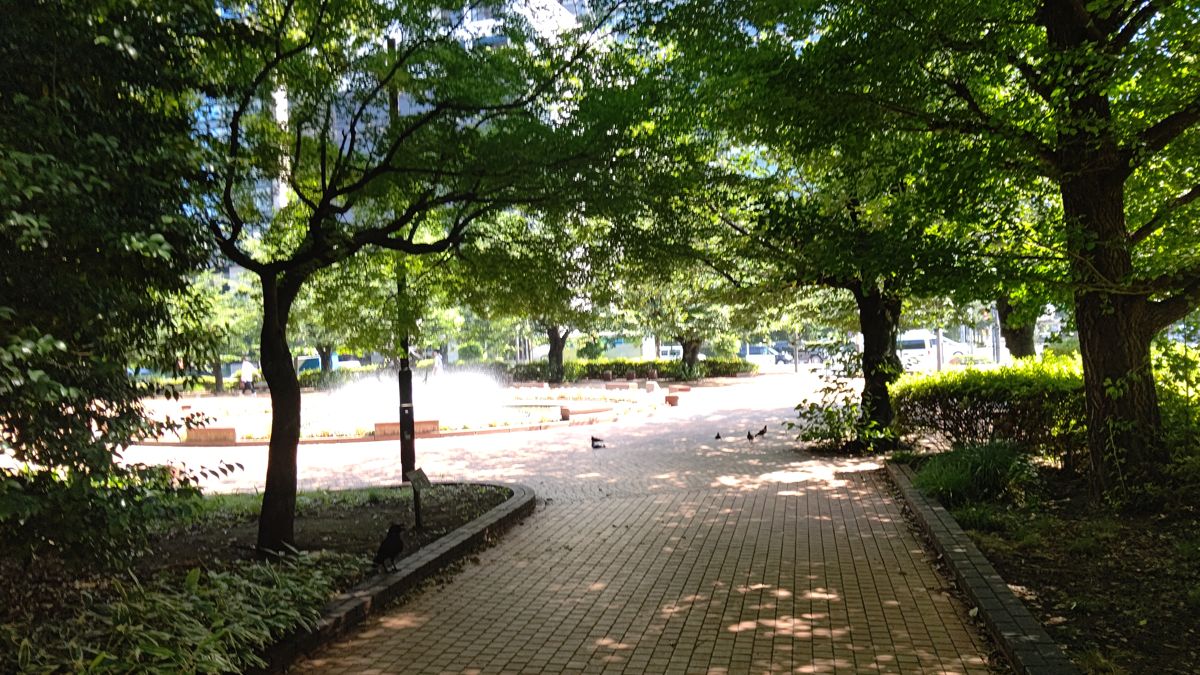
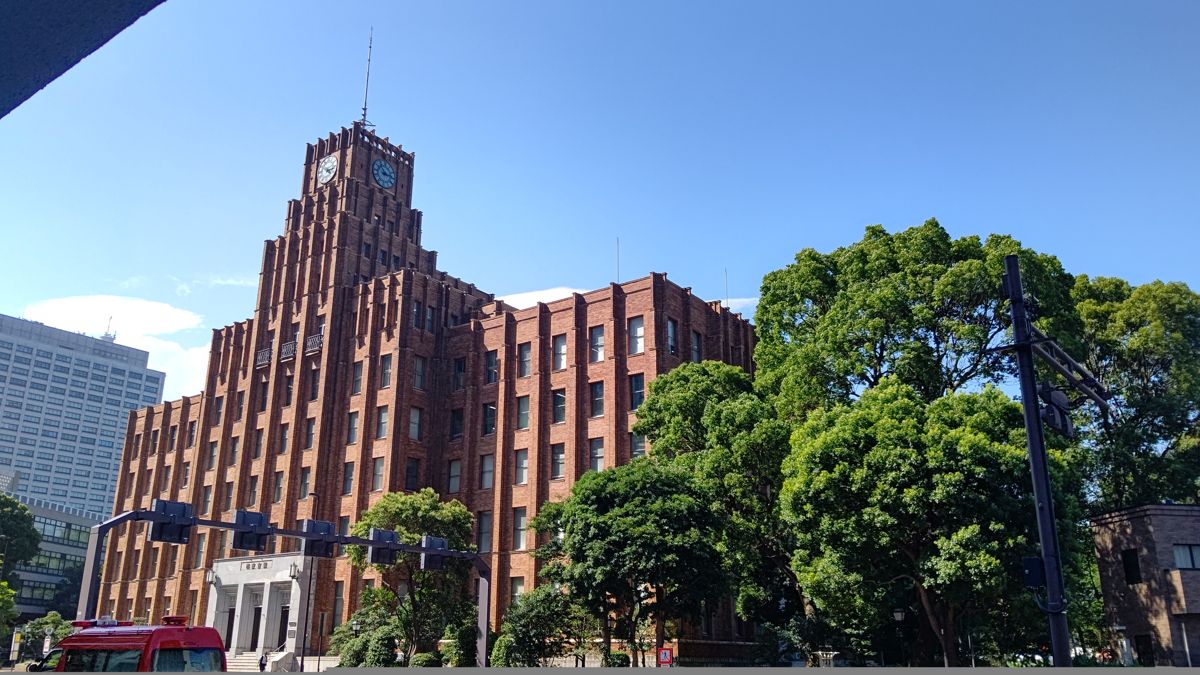
Hibiya Park, opened in 1903 on the site of an army parade ground, was Japan's first modern Western-style park. It covers 16 hectares and is planted with many trees, including the "Kubikake Icho," a ginkgo estimated to be about 500 years old. Since September 2023, renovation work has been under way area by area.[20]
Though surrounded by government offices and the buildings of Ginza and Yurakucho, the park has woodland-like spots where ferns grow thick beneath tall trees.
A garden inside a hotel: the Japanese garden of the New Otani
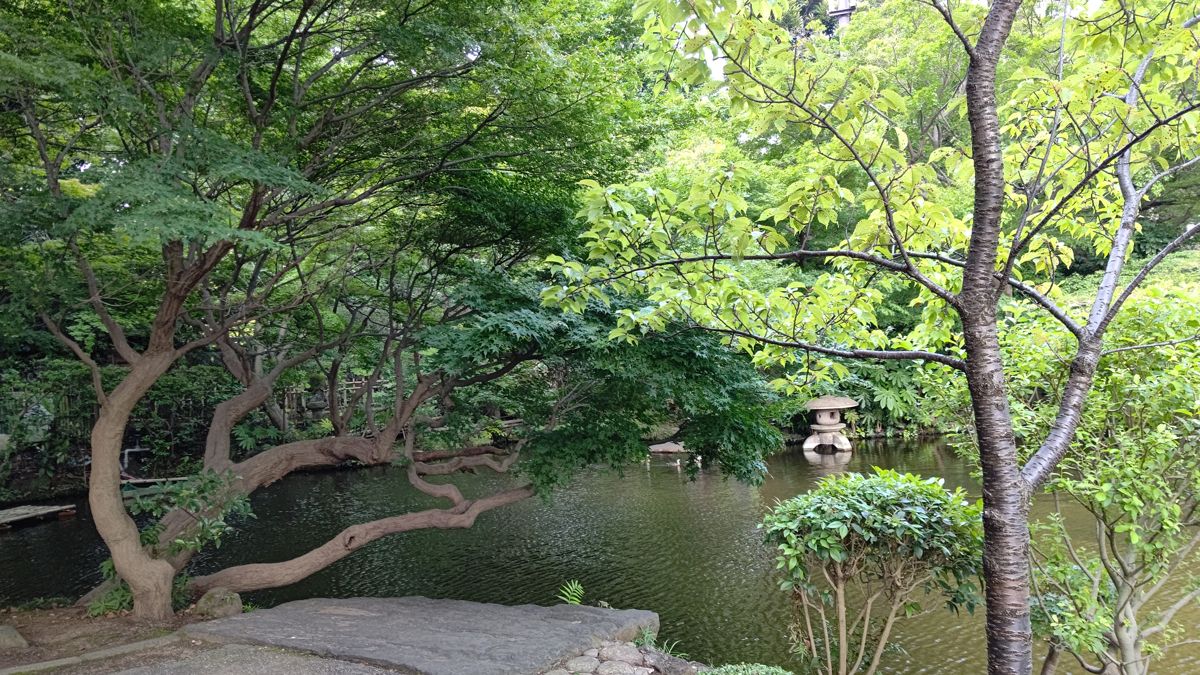
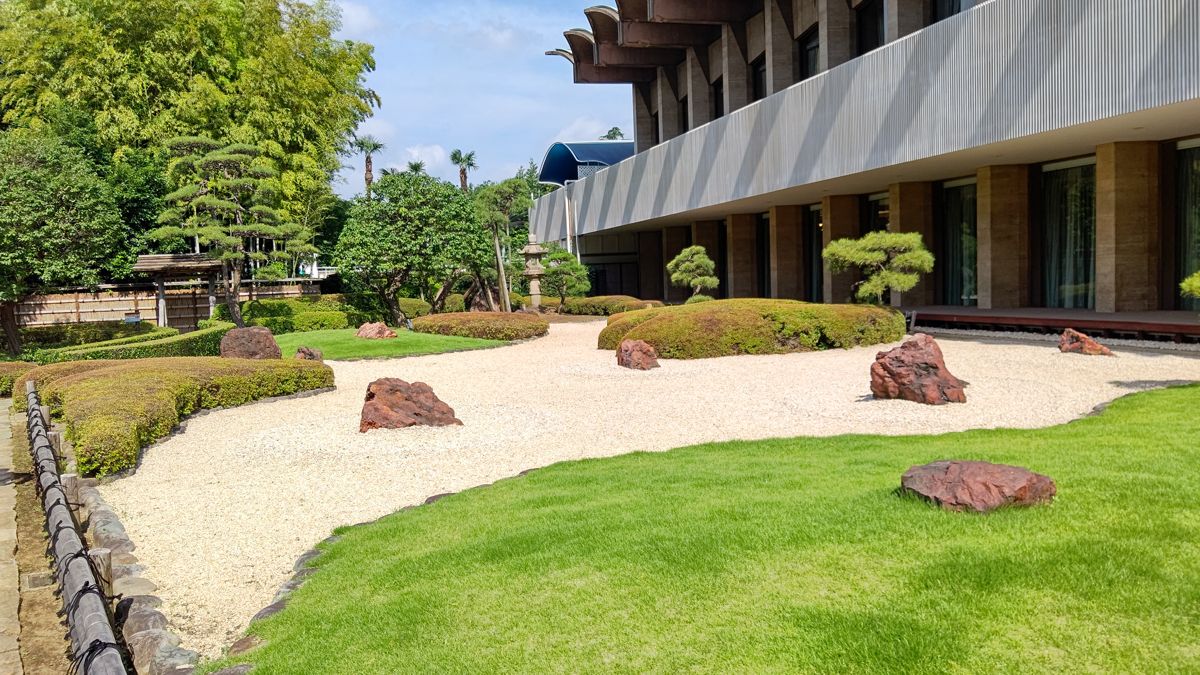
The Hotel New Otani in Kioicho has a Japanese garden of about 10,000 tsubo (roughly 3.3 hectares). In the early Edo period it was the site of a secondary residence of Kato Kiyomasa; after the Kato family was dispossessed it became a residence of the Ii family until the end of the shogunate. It later became the residence of the Fushimi-no-miya family and was known as a beautiful garden wrapped in pines and camphor trees.[21]
Green in the streets
Street trees: one million in Tokyo
As of 1 April 2023, Tokyo had 1,000,546 tall street trees. Of these, metropolitan roads account for 645,875, more than 60%; ward roads 206,451; city, town and village roads 123,986; and national roads 24,234.[22]
Unit: trees. Top 10 species. Bar length relative to dogwood = 100. Source: Tokyo Bureau of Construction, "Tokyo Street Trees Summary Table"[22]
Even the top ten species account for only about 30% of the total; many kinds of street trees are used.[22] The top species, flowering dogwood, is North American, and dogwoods given by the United States in 1915 stand in the Diet's front garden.[23]
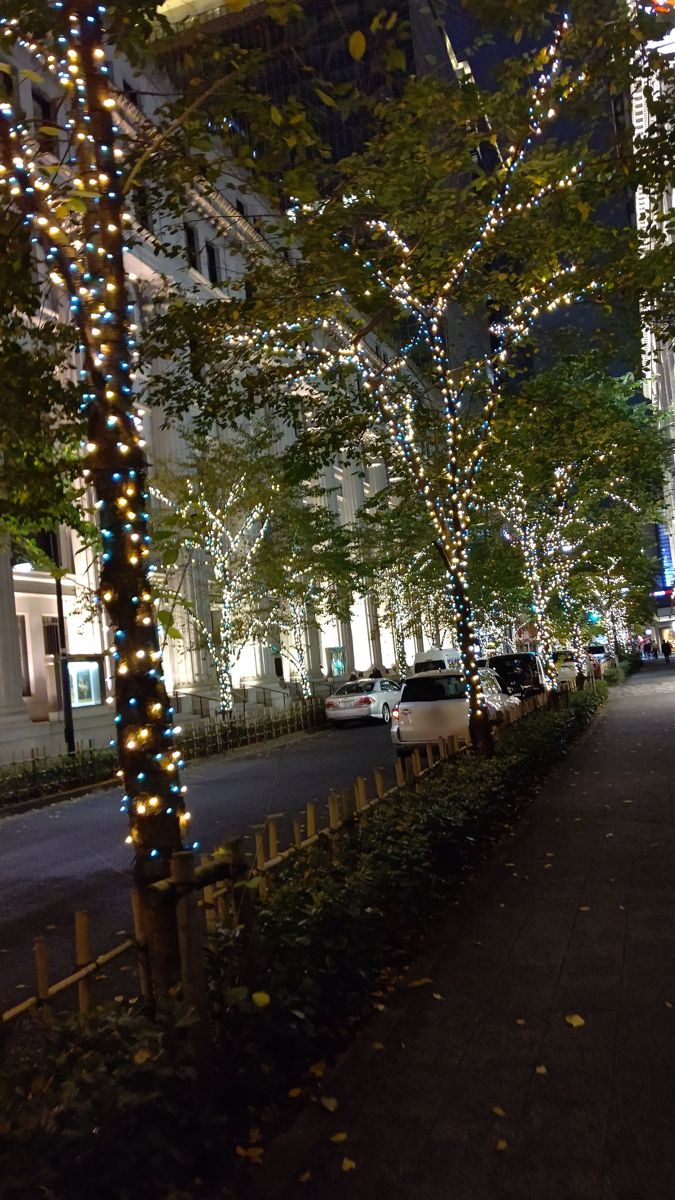
Street trees do more than give shade. In central Tokyo in winter, they become the frame for illuminations, with lights wound around their trunks and branches to brighten the street—a way of using trees while they are still standing.
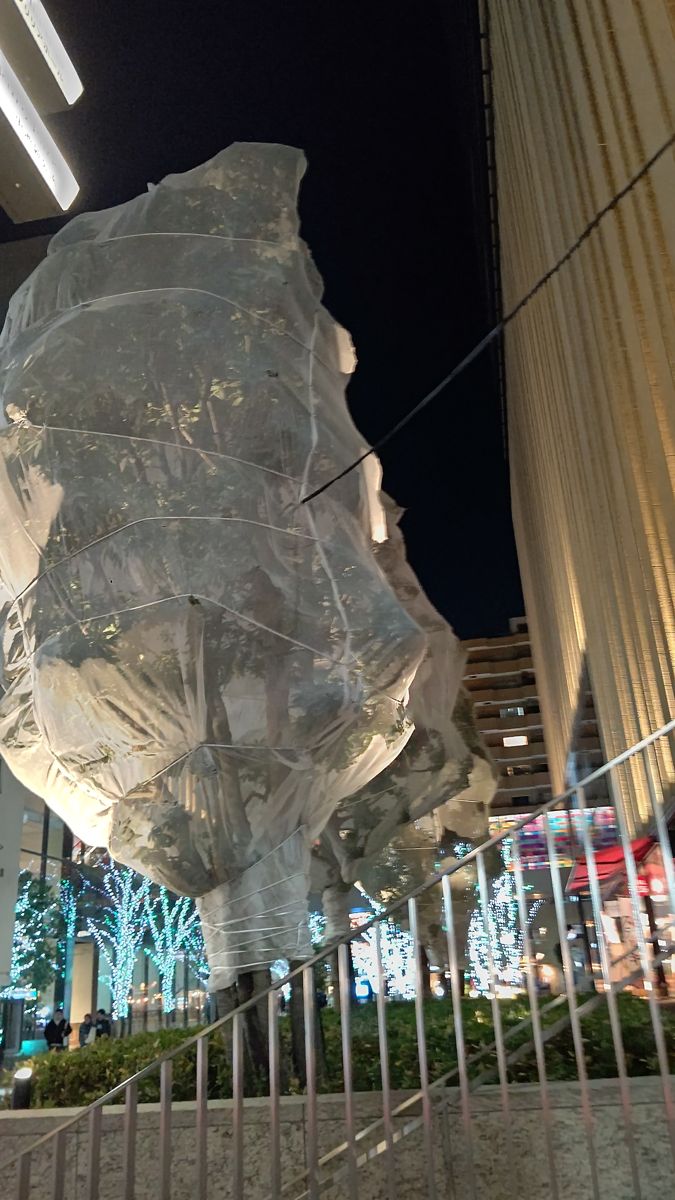
In the same winter streets, you also see trees wrapped whole in white netting. A tree I saw in Ikebukuro had been covered, branches and leaves and all, in netting to see it through the winter, while the street trees beyond it were lit with illuminations.
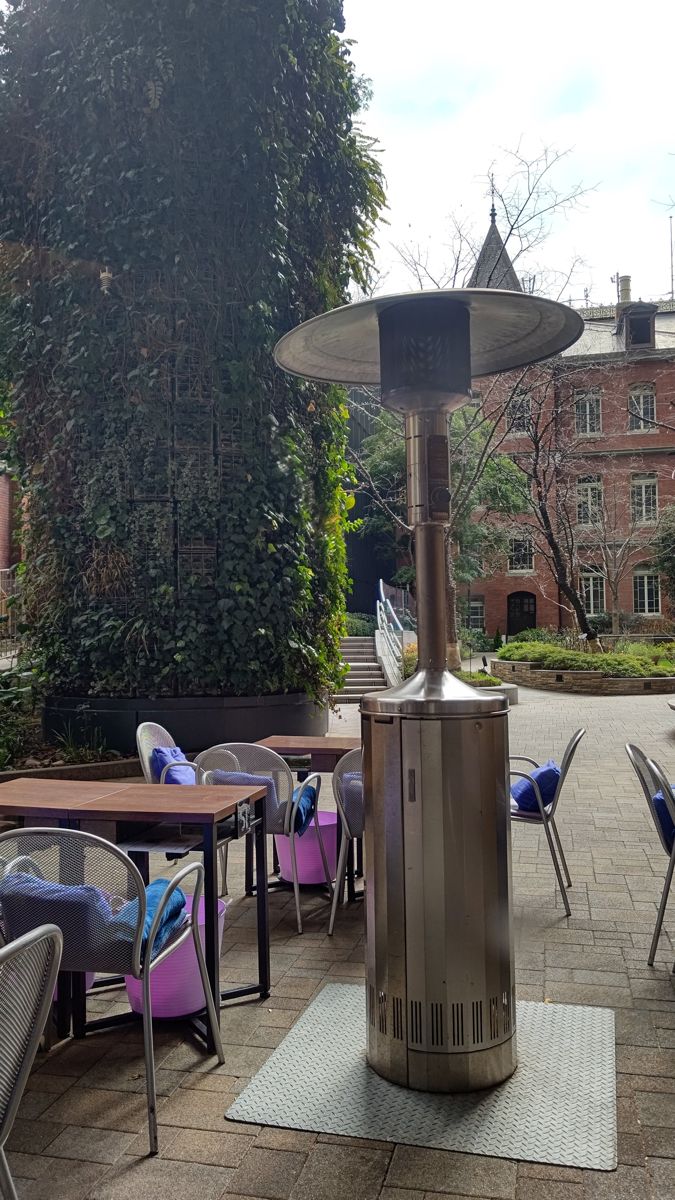
Between office towers, walls and columns themselves are sometimes covered in plants—"green walls." The Mitsubishi Ichigokan Museum in Marunouchi is a reconstruction of the Mitsubishi Ichigokan designed by Josiah Conder in 1894; it opened in 2010, and its courtyard has an English-style garden with about 40 varieties of heritage roses.[24] Its designer is the same as that of the former Iwasaki residence (Chapter 5). Beside the courtyard café stood a thick column covered in climbing plants.
Greenery is found inside buildings too. In the Peak Lounge, in the glass-walled atrium on the 41st floor of the Park Hyatt Tokyo—which occupies floors 39 to 52 of Shinjuku Park Tower—bamboo was planted like a grove.[25]
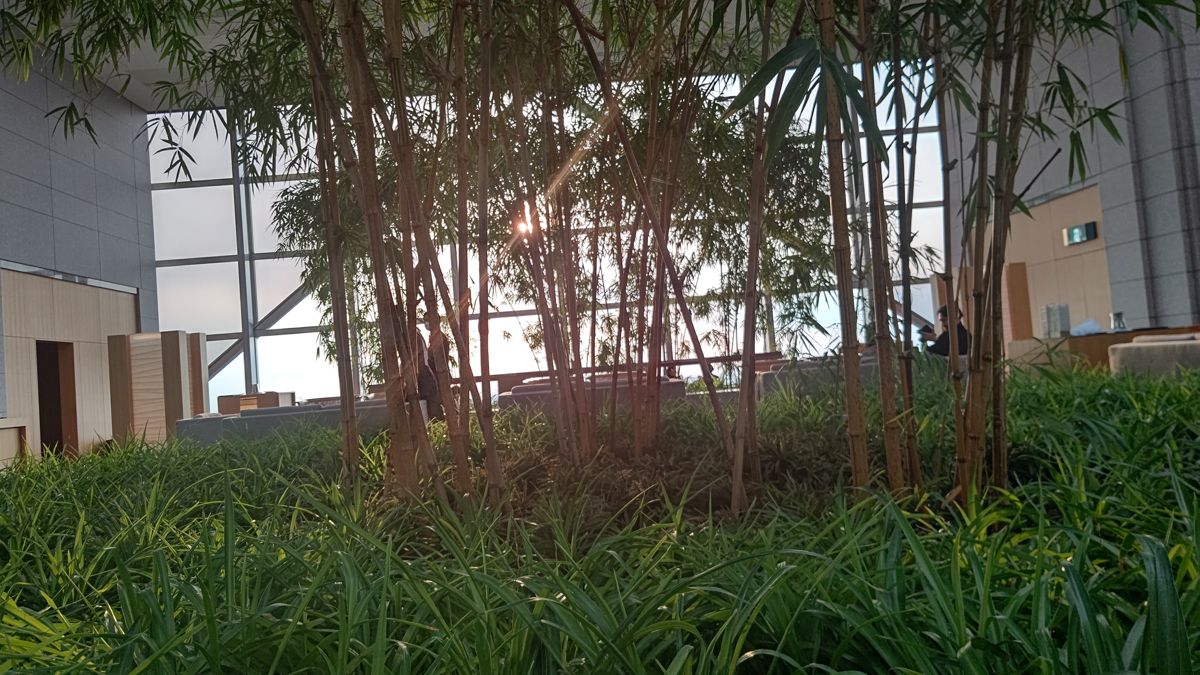
I have not confirmed whether the bamboo is real or how it is grown.
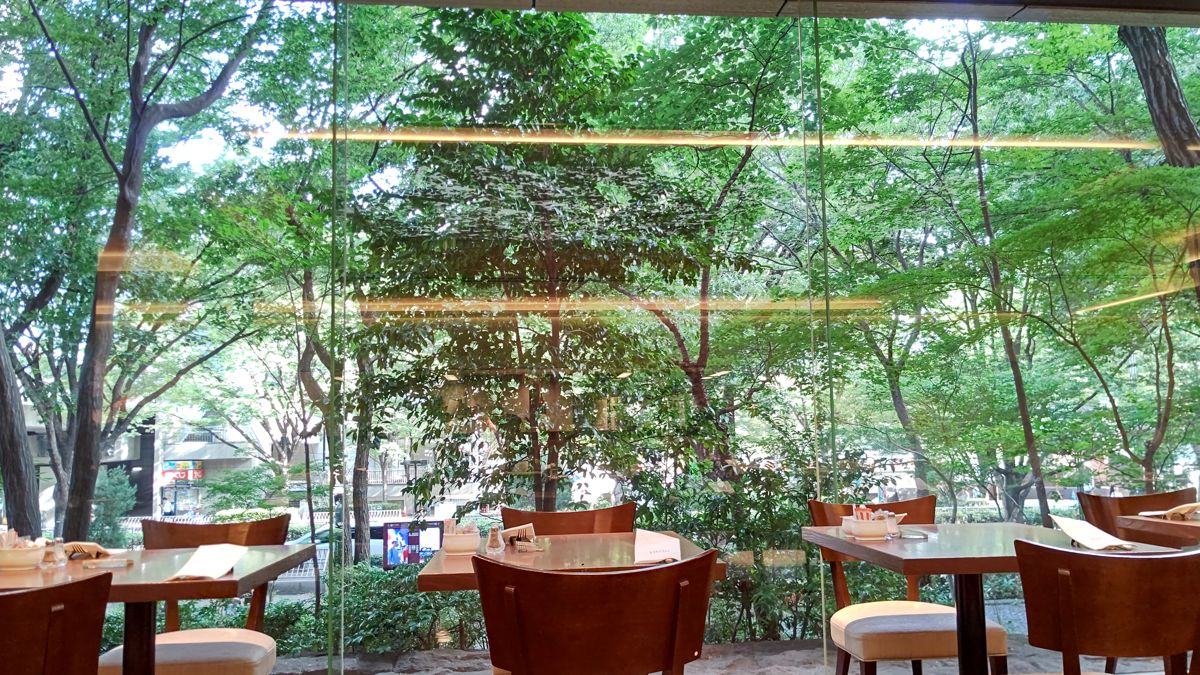
At the Keio Plaza Hotel, also in Nishi-Shinjuku, the green of summer trees filled the restaurant's large windows.
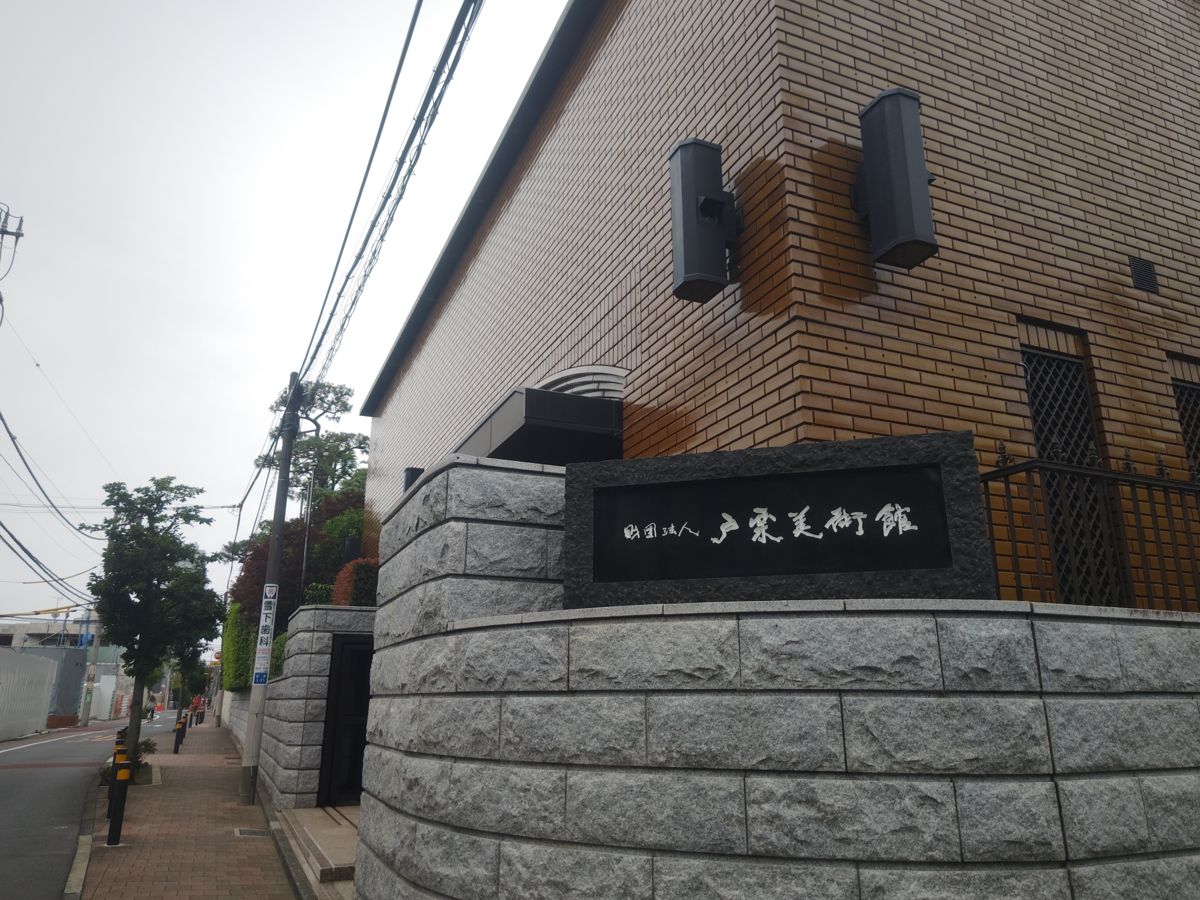
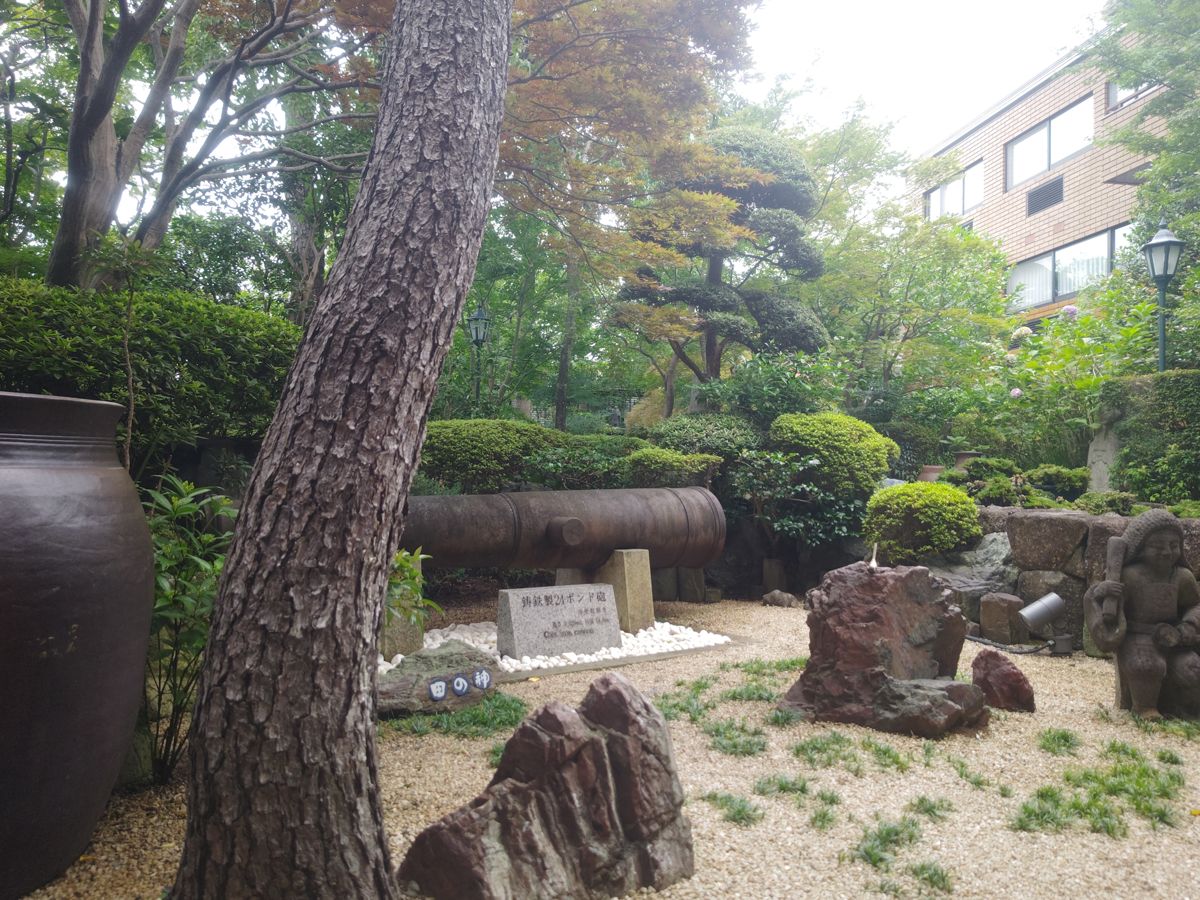
The higher the price of land, the more luxurious the space given over to greenery. The Toguri Museum of Art in Shoto, Shibuya, which collects ceramics such as Imari and Nabeshima ware, opened in 1987.[26] Beside its entrance is a garden of pines and clipped shrubs set with stones. In my view, in an expensive residential area, leaving space unbuilt and presenting it as greenery is itself a form of display.
Tokyo Midtown in Roppongi is a mixed-use complex that opened in March 2007, with SOM and Kengo Kuma and Associates among its designers.[27] Bamboo is planted in its atrium, and wood-colored louvers and handrails and a stepped wooden bench are combined with the greenery seen through the glass.
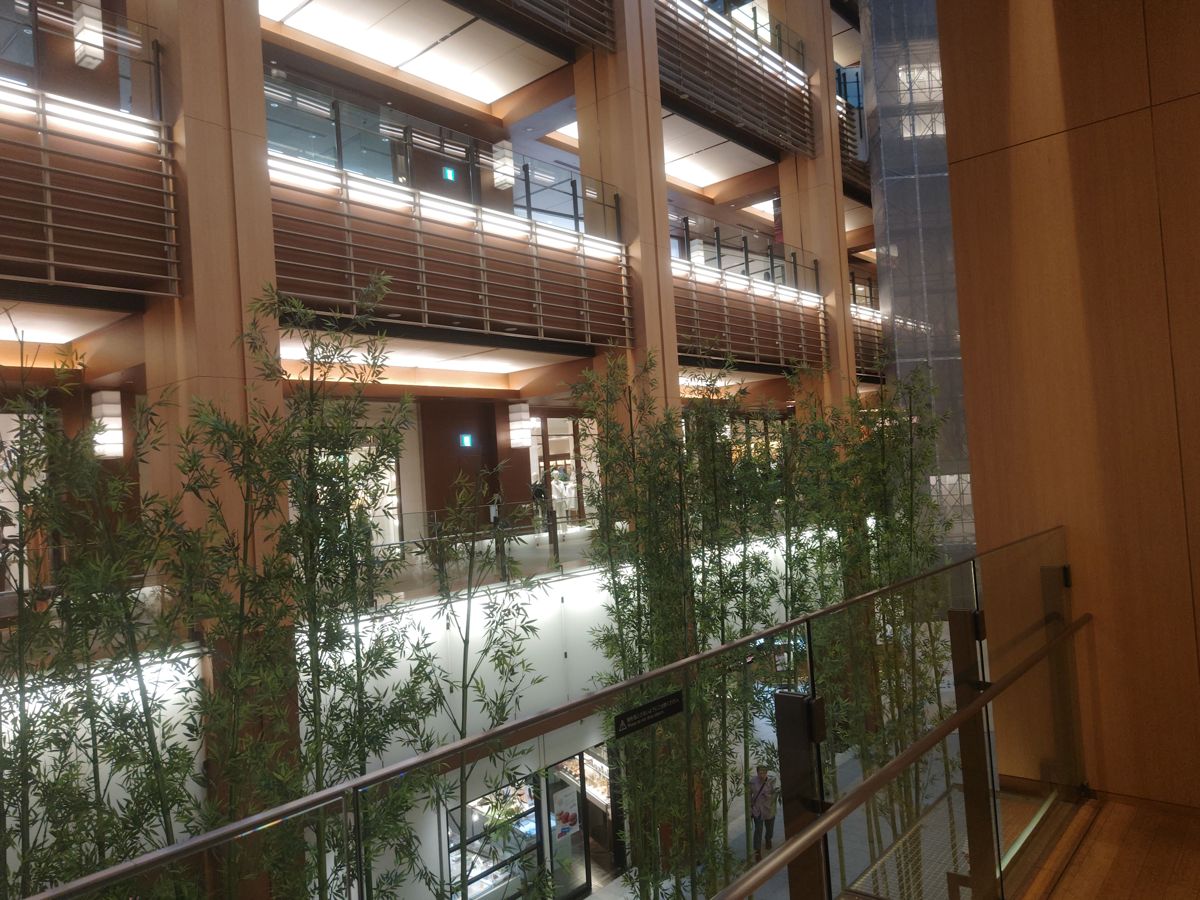
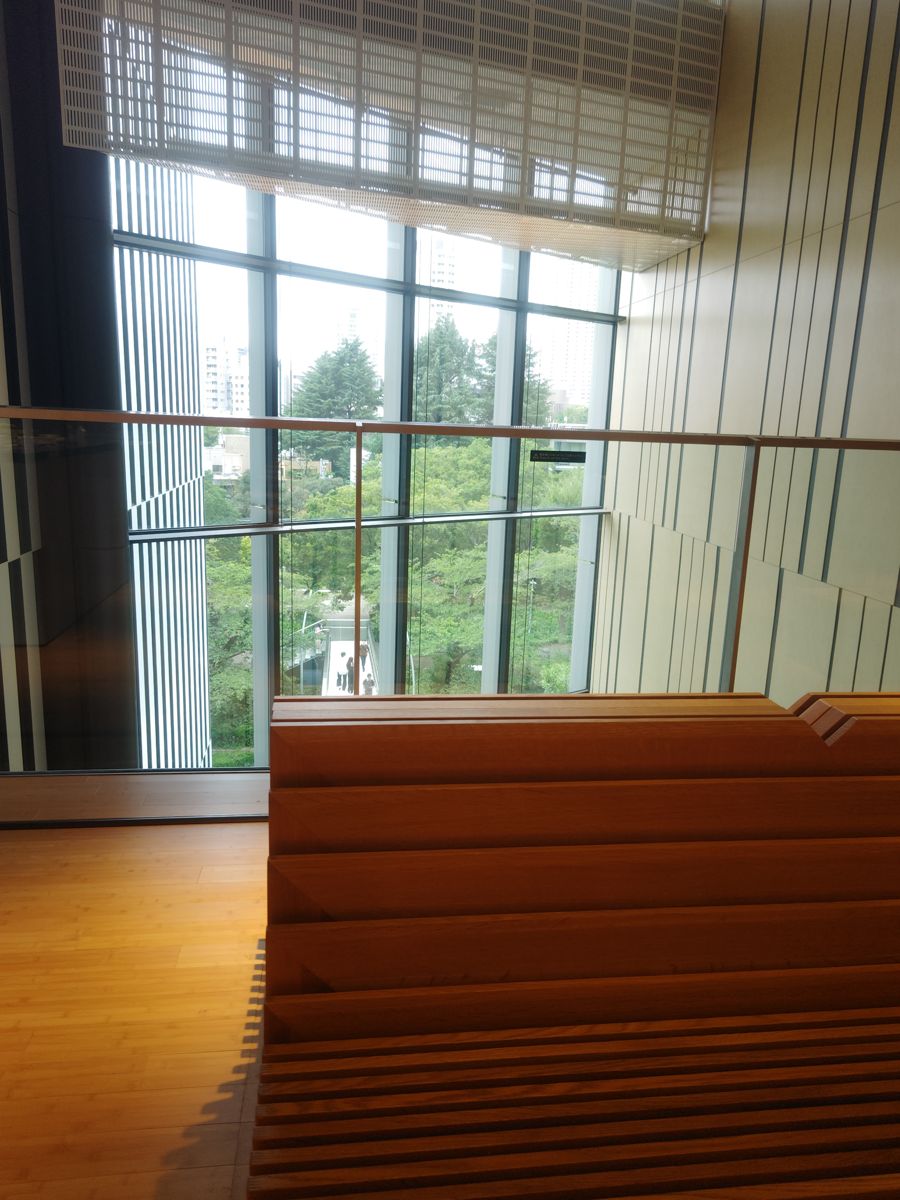
I have not confirmed whether the louvers and bench are solid wood or wood-grain veneer, or whether the bamboo is real.
Famous tree avenues
| Avenue | Tree Species | Details |
|---|---|---|
| Jingu Gaien ginkgo avenue Minato/Shinjuku | Ginkgo | 146 trees in four rows 9 m apart, 300 m long. Seedlings raised from 1908; completed 1923. Designed by landscape architect Orishimo Yoshinobu[28] |
| Omotesando zelkova avenue Shibuya/Minato | Zelkova | About 900 m from Aoyama-dori to Meiji Jingu[29] |
| Baba Daimon zelkova avenue Fuchu | Zelkova | The only zelkova avenue in Japan designated a national Natural Monument[30] |
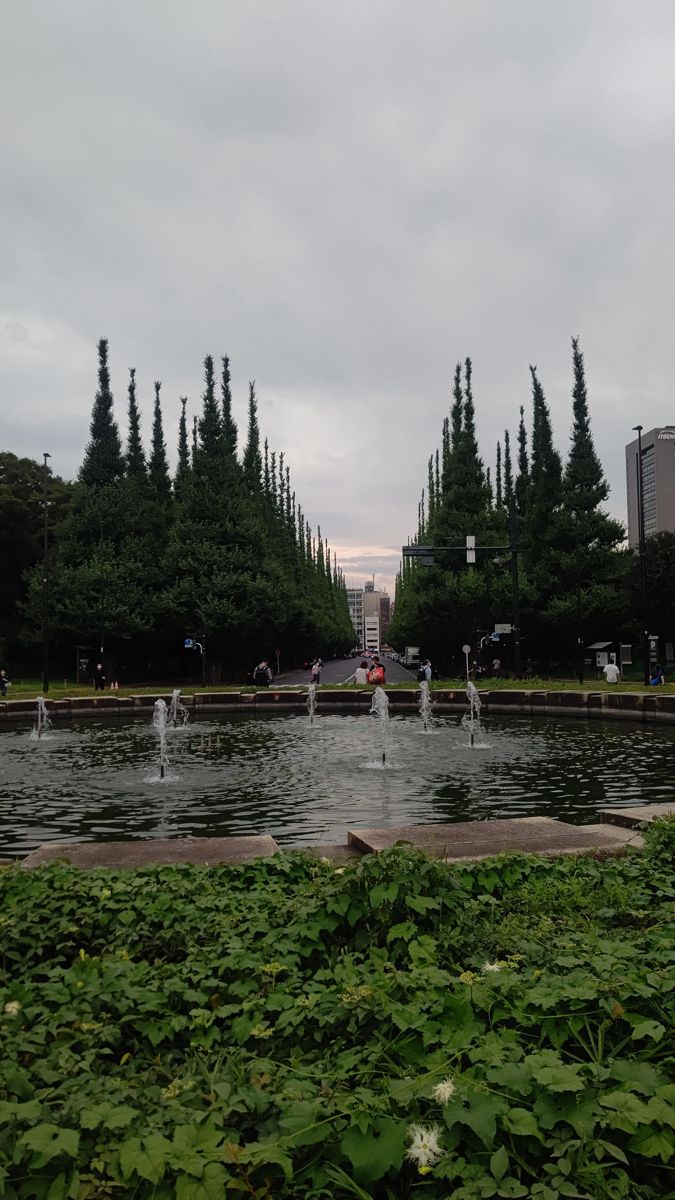
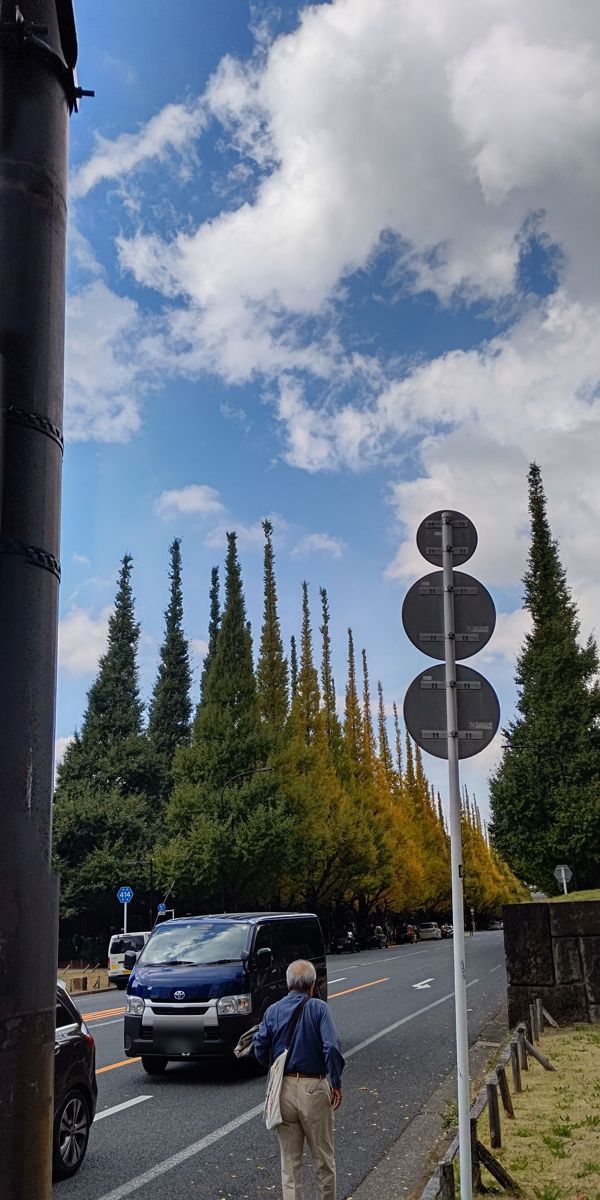
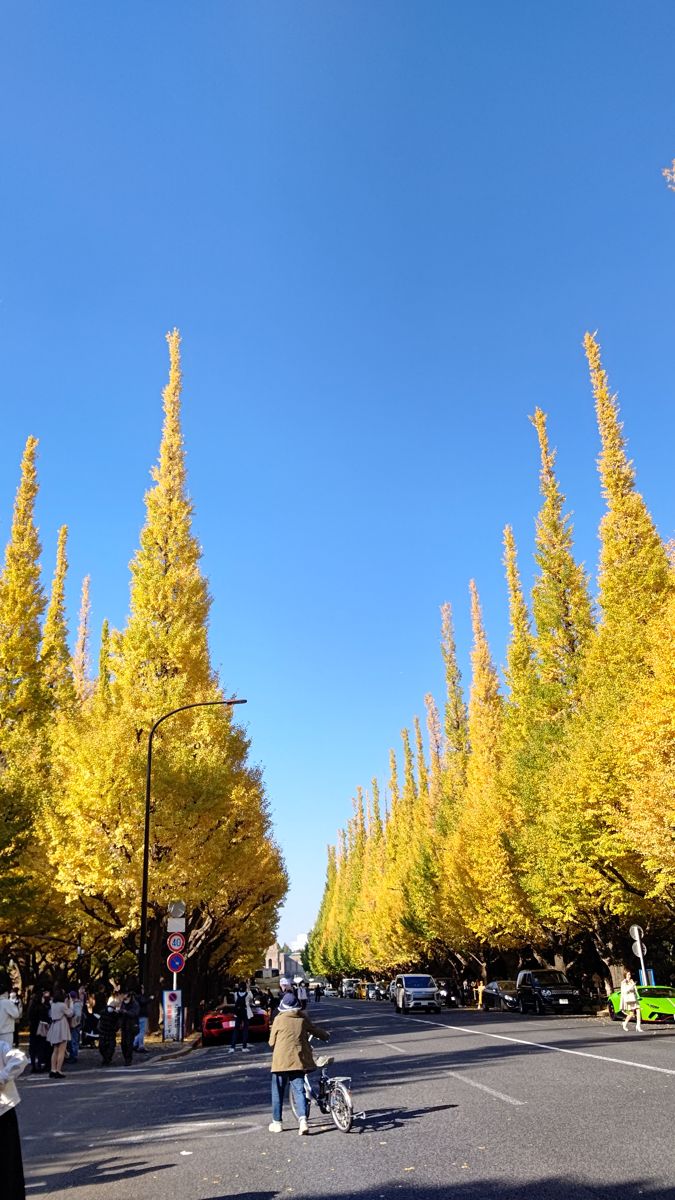
The Jingu Gaien ginkgo avenue uses a painter's trick. The trees on the Aoyama-dori side are kept taller and get shorter further in, creating a perspective effect so that the Meiji Memorial Picture Gallery looks its best at the end of the avenue.[28] It is an example of using tree height itself as a tool for composing a view.
The Jingu Gaien redevelopment and opposition to the tree felling
Jingu Gaien, home of the ginkgo avenue, is undergoing large-scale redevelopment. The developers are four parties—Mitsui Fudosan, Meiji Jingu, the Japan Sport Council and Itochu—and the plan is to rebuild Jingu Stadium and Chichibunomiya Rugby Stadium and put up high-rise buildings. The Tokyo government approved the project on February 17, 2023.[31]
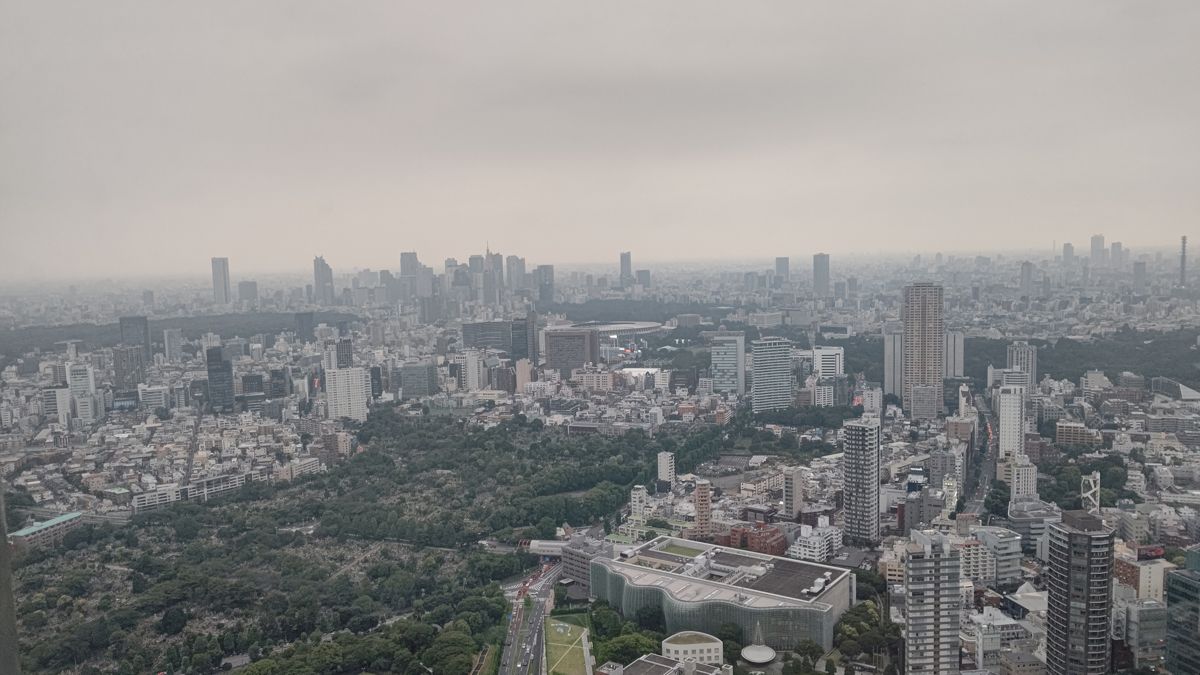
As the plan became known, opposition to the tree felling spread. From February 2023, a petition asking the Tokyo government to withdraw its support for the plan gathered more than 225,000 signatures, and in September that year the International Council on Monuments and Sites (ICOMOS) issued a "Heritage Alert," warning that the plan would lead to irreversible destruction of cultural heritage.[32]
The number of trees to be cut has been revised several times. According to the Tokyo government's fact sheet, the number fell from 971 in the draft environmental assessment of August 2021 to 556 at the time of the August 2022 report, and to 511 with the change of September 30, 2024. The total number of trees is planned to rise from 1,904 before the project to 2,304 after it.[31] In September 2024, Mitsui Fudosan announced a revised plan reducing the felling of tall trees 3 m or higher from 743 to 619. Because it counts differently from the Tokyo documents, the numbers do not match.[33]
All four rows of the ginkgo avenue are to be kept. Based on a root survey, the distance between the new baseball stadium building and the avenue was widened from about 8 m to about 18.3 m.[31] Still, those calling for conservation argue that what matters is not the number of trees cut but "the quality of tree conservation," and that historic trees should be kept where they were planted.[34]
Felling began on October 28, 2024.[35] Court cases also continue. In a suit by 82 plaintiffs, including nearby residents, seeking to revoke the felling permit, the Tokyo District Court rejected the claim in May 2026.[36] A separate suit seeking to revoke the project approval concluded hearings at the Tokyo District Court on September 15, 2026, with a ruling expected on January 28, 2027.[37]
The author's view
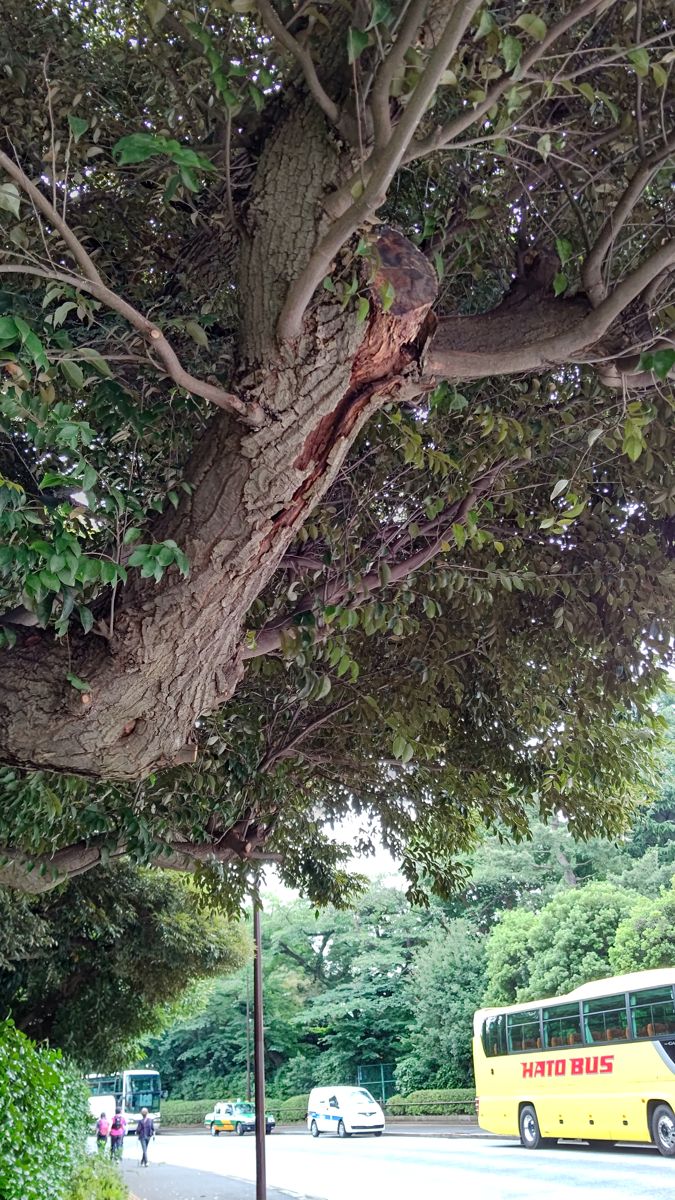
Personally, I am in favor of replanting trees through the redevelopment. When I walked through Gaien in June 2023, I noticed quite a few trees that had been poorly pruned and had wounds or defects. If such trees are to be replaced, I think that is a good thing.
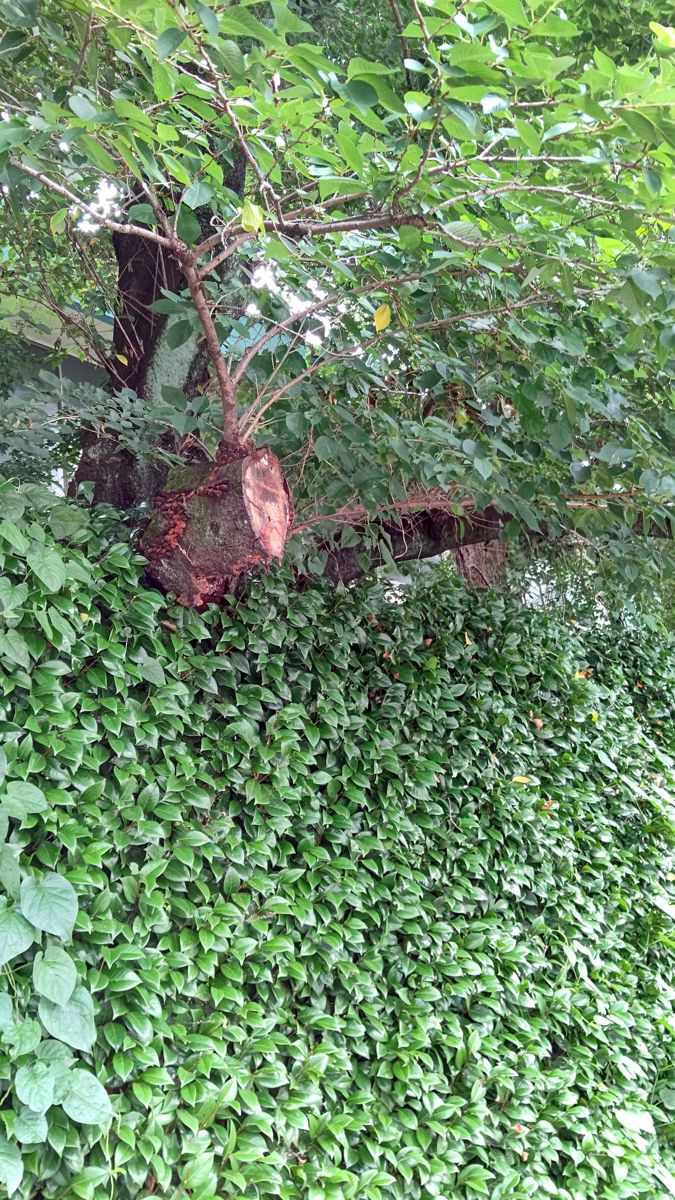
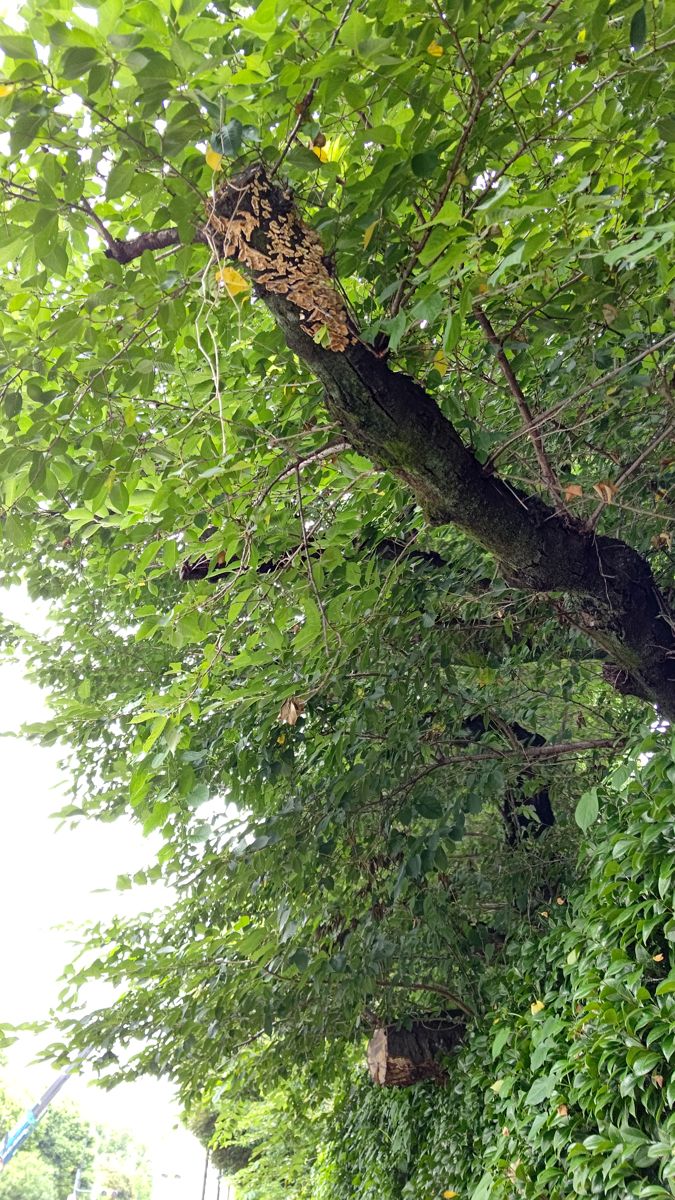
This is, however, my impression from what I saw while walking, not a survey of the condition of all the trees in Gaien. I have also not confirmed whether the trees in the photos are among those to be felled. Damaged trees can also be kept, without replanting, through proper pruning and care. That "quality of conservation" is exactly what the opponents are asking about.
Meguro River cherry trees
About 800 Somei-yoshino cherries line some 3.8 km of the river from Ikejiri-Ohashi to Kamenoko Bridge.[16] Somei-yoshino was chosen as Tokyo's official flower in 1984.[38]
A green path: the Tamagawa Aqueduct
The Tamagawa Aqueduct was dug to bring water to the city of Edo. Work began in 1653, linking the Hamura intake to Yotsuya-Okido over about 43 km, and water began flowing the following year.[39]
| Year | Event |
|---|---|
| 1653 Jo'o 2 | Excavation begins; water supply starts the next year[39] |
| 1737 Genbun 2 | Kawasaki Heiemon Sadataka, on shogunal orders, is said to have planted cherries on both banks around Koganei Bridge (the Koganei cherries)[39] |
| 1924 Taisho 13 | "Koganei (Cherries)" designated a Place of Scenic Beauty[39] |
| 1971 Showa 46 | Plan adopted to make the embankment a green path[39] |
| 1981 Showa 56 | Metropolitan Tamagawa Aqueduct Green Path partly opens (Heiwa Bridge–Mure Bridge)[39] |
| 2003 Heisei 15 | Tamagawa Aqueduct designated a national Historic Site[39] |
A civil-engineering work built to carry water became a cherry-blossom landmark and, eventually, a green path. Edo's waterway now links Tama to the edge of central Tokyo as a path of greenery.
Trees of memory and ceremony
Trees that survived the war
Tokyo still has trees that were burned in the air raids and are alive today. A study of the 23 wards found that, of 474 candidate trees, 200 were confirmed as "war-damaged trees" through testimony and other evidence, and 150 more were presumed to be. Ueno Park has 53 confirmed war-damaged trees, and the area around Tomioka Hachimangu in Koto is one of the places where 93 are concentrated. At some sites, such as Tobiki Inari Shrine in Sumida, several survive in a small precinct.[40]
| Location | Tree Species | Today |
|---|---|---|
| Senso-ji (Taito) | Ginkgo | An incendiary bomb struck its base; the upper half burned away and the hollow trunk is charred inside. It still puts out branches and leaves[41] |
| Koenji temple (Koishikawa, Bunkyo) | Ginkgo | Upper part burned in the Great Tokyo Air Raid; trunk hollowed and charred. It sends up new shoots and bears green leaves[42] |
| Zenkojizaka (Koishikawa, Bunkyo) | Muku tree | Upper part burned in the air raids and most of the trunk was cut, but it is growing well[42] |
| Nitta Shrine (Ota) | Zelkova | Cited in research as an example of a war-damaged tree[40] |
Even if the center of a trunk turns to charcoal, a tree can keep carrying water and nutrients as long as its living outer layer survives. Trees that sprouted from burned trunks and are still in leaf more than 80 years later are living witnesses that carry the memory of the air raids in their bodies.
The ginkgo at Senso-ji and the ginkgo at Koenji are described in very similar terms, but they are different trees. The Senso-ji tree is a sacred tree over 800 years old standing on the west side of the precinct; the Koenji tree is inside the temple's kindergarten in Koishikawa, Bunkyo. Both had their trunks burned hollow in the air raids.
The Diet's front garden: trees from every prefecture
In the front garden of the National Diet Building stand "prefectural trees" given by prefectures across Japan. They were presented to mark the 80th anniversary of the opening of the Diet on 29 November 1970.[17] They are planted on both the House of Representatives and House of Councillors sides; according to Shiga Prefecture, each prefecture has two trees on each side.[43]
Trees are living things, so they are replaced when they die. On 18 November 2025 a dead Japanese maple from Shiga on the House of Representatives side was replaced with a 4 m Japanese maple grown in Shiga.[43] The front garden also has a great ginkgo that has stood since before the Diet Building was built.[17]
The National Tree-Planting and Tree-Nurturing Festivals in Tokyo
The National Tree-Planting Festival is the central event of Japan's national greening movement, at which the Emperor and Empress plant trees and sow seeds. It has been held every year since 1950, starting in Yamanashi, rotating among the prefectures.[44] The National Tree-Nurturing Festival is an event at which members of the Imperial Family later tend the trees planted at a tree-planting festival.[45] Tokyo hosted the tree-planting festival in 1996 and the tree-nurturing festival, which tended those trees, in 2018.
| Year | Event | Venue | Details |
|---|---|---|---|
| 1996 (Heisei 8) May 19 | 47th National Tree-Planting Festival | Mountain forest: Hinohara Tomin-no-Mori (Hinohara) Town forest: Tatsumi-no-Mori Seaside Park (Koto) Sea forest: Central Breakwater Inner Landfill | Theme: "Forests support our lives, cities nurture green: living next to the forest in Tokyo." About 12,000 participants. The Emperor and Empress planted trees in the sea forest and sowed seeds in the town forest[44][46][45] |
| 2018 (Heisei 30) Nov. 17–18 | 42nd National Tree-Nurturing Festival | Tree care: planned site of Umi-no-Mori Park (Central Breakwater Inner Landfill) Ceremony: Musashino Forest Sport Plaza (Chofu) | Theme: "From nurturing trees, passing on a life with wood." About 5,000 attended the ceremony. The then Crown Prince pruned a ginkgo planted in 1996 and the then Crown Princess applied fertilizer[47][48] |
The 1996 "sea forest" was land reclaimed from garbage and construction soil (for land reclamation, see Chapter 6). At the time of the tree-nurturing festival some 20 years later, a Tokyo Metropolitan Government document noted that "the venue, then a bare landfill, has been reborn as a fine forest of grown trees."[48] This forest is today's Umi-no-Mori (Sea Forest) Park. Splitting the event across three venues—mountain (Hinohara), town (Koto) and sea (landfill)—presented at once the span of Tokyo's green, from the forests of Tama to the bay shore.
The species planted differ by source: the Forestry Agency's list of festivals gives "ginkgo, Castanopsis sieboldii"[44], while the Tokyo festival document lists the 1996 trees to be tended as "ginkgo, Castanopsis sieboldii, Oshima cherry."[45] In the Forestry Agency's list (up to the 64th festival in 2013), this is the only tree-planting festival held in Tokyo.
Sources
- 林野庁関東森林管理局 広報資料(高尾山) PDF
- 環境省 新宿御苑 見どころマップ PDF
- 環境省 巨樹・巨木林データベース 観察コースガイド「新宿御苑」 PDF
- 東京都建設局「都立代々木公園の整備計画 答申」 PDF
- GLTJP「代々木公園」 Link
- ニッポン旅マガジン「水元公園」 Link
- 東京都建設局 浜離宮恩賜庭園 資料 PDF
- ニッポン旅マガジン「林試の森公園」 Link
- 東京都建設局 林試の森公園 資料 PDF
- ニッポン旅マガジン「国立科学博物館附属自然教育園」 Link
- 目黒区「駒場野公園」 Link
- 東京都建設局 井の頭恩賜公園 公式ページ「公園について」 Link
- 三井住友トラスト不動産「このまちアーカイブス 吉祥寺」 Link
- 新宿区「新宿中央公園」 Link
- 三井住友トラスト不動産「このまちアーカイブス 新宿」 Link
- ニッポン旅マガジン「目黒川の桜並木」 Link
- 参議院「国会議事堂を見る」 Link
- 国土交通省関東地方整備局「新宿御苑旧御凉亭」 Link
- 国土技術政策総合研究所 緑化生態研究室「道路緑化における効果的・効率的な施工・管理手法に関する研究」(平成22〜24年度) PDF
- GO TOKYO「日比谷公園」 Link
- ホテルニューオータニ「日本庭園」 Link
- 東京都建設局「東京の街路樹 総括表」(令和5年4月1日現在) PDF
- 衆議院「国会前庭」 Link
- GO TOKYO(東京観光公式サイト)「三菱一号館美術館」 Link
- Precious.jp「パーク ハイアット 東京 ピーク ラウンジ」 Link
- 戸栗美術館 公式サイト Link
- All About「東京ミッドタウン」(2007年1月7日) Link
- 港区「港区今昔物語」(神宮外苑いちょう並木) Link
- 国土交通省「観光社会資本の事例」(表参道) PDF
- 東京都「多摩のまちガイド 府中市」 PDF
- 東京都都市整備局「神宮外苑地区におけるまちづくり ファクトシート」(令和7年12月2日改訂) PDF
- CNN.co.jp 明治神宮外苑の再開発計画をめぐる記事(2023年10月6日) Link
- BUILT「神宮外苑再開発で“伐採樹木”124本減らす」(2024年9月11日) Link
- RIEF「三井不動産が「伐採を124本減らす」等の見直し案公表」(2024年9月9日) Link
- 時事通信「神宮再開発、樹木伐採を開始」(2024年10月28日) Link
- 共同通信(秋田魁新報電子版)「樹木伐採、取り消し認めず 神宮外苑再開発、住民敗訴」(2026年5月12日) Link
- 日本共産党東京都委員会「外苑再開発 認可取り消し訴訟が結審」(2026年9月28日) Link
- 東京都「東京都の紋章・花・木・鳥」 Link
- 東京都水道局 玉川上水 年表 PDF
- 菅野博貢・根岸尚代「東京都23区に残存する戦災樹木の分布特性についての一考察」『ランドスケープ研究』83(5)(2020年) PDF
- 乗りものニュース「都内に意外と多い『街かど戦禍遺産』たち」(2025年3月9日) Link
- 環境省 巨樹・巨木林データベース 観察コースガイド「本郷・小石川」 PDF
- 滋賀県「国会議事堂前庭の県の木『もみじ』を植え替えました」 Link
- 林野庁「(参考)全国植樹祭開催一覧」 PDF
- 東京都産業労働局 第42回全国育樹祭の資料(平成8年第47回全国植樹祭の概要を含む) PDF
- 宮内庁「全国植樹祭へのご臨場」 Link
- 東京都 知事の活動「第42回全国育樹祭」(2018年11月17日・18日) Link
- 東京都産業労働局 第42回全国育樹祭の概要資料 PDF